


 English
 Français
 中文简体
中文简体
CNC Aluminum Extrusion: Process, Cost & Machining Guide
Content
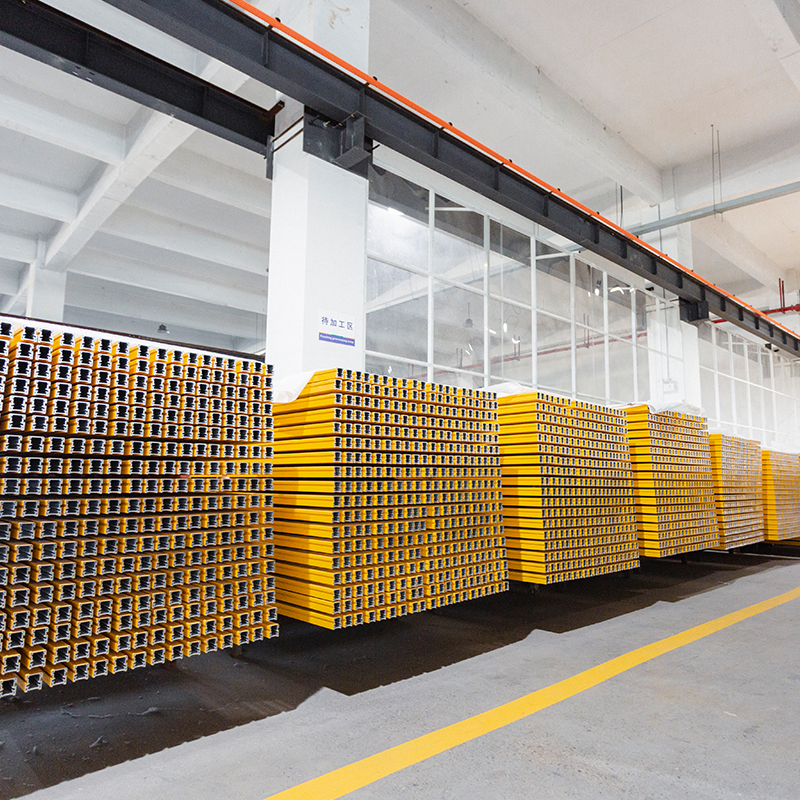
CNC aluminum extrusion is a hybrid manufacturing route: an aluminum billet is first pushed through a steel die to form a near-net-shape profile, and CNC machining then adds precision features — cut-to-length, drilled and tapped holes, milled pockets, slots, and engravings. The extrusion step delivers low-cost geometry along the part's length, while the CNC step supplies feature accuracy down to ±0.05 mm that a die alone cannot produce.
For parts with a constant cross-section at volumes of roughly 100–10,000 units, this combination typically cuts part cost by 40–70% compared with milling the entire part from solid billet, because 85–95% of the material ends up in the finished profile instead of being machined away as chips. This guide covers the production workflow, the CNC operations used on extruded profiles, alloy and tolerance selection, and the design rules that keep secondary machining cheap.
From Billet to Finished Part: The Production Workflow
A CNC-machined extrusion part moves through the extrusion press first and the machining center second. The sequence matters, because heat treatment and straightening must happen before precision machining, and finishing usually happens after:
- Die fabrication — an H13 tool steel die is machined and heat-treated, typically costing $800–3,000 and lasting well over 100 tons of production.
- Extrusion — the billet is heated to 420–480°C and forced through the die by a hydraulic ram applying 1,500–15,000 tons, producing profiles up to 6–7 m long.
- Aging — profiles are baked to temper: T5 at roughly 180°C for 4–6 hours, or T6 with a solution treatment near 530°C followed by aging.
- CNC cutting — double-head saws or CNC routers cut profiles to length at ±0.1 mm, far tighter than the ±0.5 mm of a manual saw.
- CNC secondary machining — 3-axis or 4-axis machining centers drill, tap, mill, and countersink using dedicated fixtures that clamp the profile without distorting thin walls.
- Deburring and surface preparation — edges are broken and surfaces cleaned so coatings adhere uniformly.
- Finishing — anodizing (5–25 μm) or powder coating (60–120 μm) is applied after machining so threads and mating faces stay bare, conductive, and dimensionally accurate.
- Inspection — critical hole positions and thread gauges are verified with CMM or optical measurement against the drawing.
CNC Operations Commonly Performed on Extruded Profiles
Extrusion defines the profile's cross-section; CNC machining defines everything that makes it a usable part. The most common secondary operations include:
- Cut-to-length — CNC saws or routers hold ±0.1 mm on length and produce clean, square ends ready for assembly.
- Drilling and tapping — from M3 to M12 threads for assembly; thread depth of at least 1.5× the bolt diameter is the reliable minimum in 6061-T6.
- Pocket and slot milling — shallow pockets for PCBs, displays, or T-nuts, usually 1–3 mm deep with corner radii matching the end mill (R1–R3 mm).
- Counterboring and countersinking — recesses that let socket-head or flat-head screws sit flush with the profile surface.
- End machining — facing, notching, or angle cuts for welded or bolted frame joints.
- Engraving and marking — part numbers, logos, or scale markings cut 0.1–0.3 mm deep, often filled with paint.
Because the profile geometry is already formed, each of these operations removes only a few cubic centimeters of material. A typical secondary-machining cycle for a part with 12 holes and 8 tapped holes takes 2–4 minutes, translating to roughly $1.50–4.00 of machining cost at standard shop rates of $40–80 per machine hour.
Extrusion + CNC vs. Full CNC Machining from Billet
The central sourcing question is whether to machine the whole part from a solid block or to extrude the shape first. The answer depends almost entirely on volume and cross-section consistency:
| Criterion | Extrusion + CNC Secondary | Full CNC from Billet |
|---|---|---|
| One-time tooling | $800–3,000 (extrusion die) | $100–500 (program + fixture) |
| Material utilization | 85–95% | 10–30% |
| Unit cost @ 1,000 pcs | $6–12 | $25–45 |
| Maximum practical length | 6–7 m (truck-shippable) | 1–2 m (machine bed limit) |
| Feature accuracy | ±0.05 mm on CNC features | ±0.01–0.05 mm overall |
| Economical volume | 100–10,000+ units | 1–100 units |
A concrete example: an electronics enclosure measuring 300 × 120 × 50 mm in 6061-T6, with 20 machined features, at 1,000 units. Full CNC machining costs roughly $32 per part, or $32,000 total. The extrusion route requires a $1,200 die plus about $8 per part in profile and secondary machining — a total of $9,200, a saving of about 70%. Below roughly 50–100 units, however, the die cost and minimum order quantity (usually 300–500 kg per profile) make billet machining the cheaper and faster option.
Alloy Selection and Tolerance Strategy
Not every extrusion alloy machines equally well. Softer alloys like 6063 tend to gum up end mills and produce long chips, while 6061-T6 breaks chips cleanly and holds tapped threads well — which is why it dominates CNC-machined extrusion work:
| Alloy & Temper | Machinability* | Tensile Strength (MPa) | Best For |
|---|---|---|---|
| 6061-T6 | 90% | 310 | Structural parts, threads, enclosures |
| 6063-T5 | 70% | 160 | Heat sinks, trim, decorative parts |
| 6082-T6 | 85% | 310 | European structural and transport work |
| 7075-T6 | 70% | 572 | Aerospace (rarely extruded, high cost) |
Tolerances should be split between the extruded geometry and the machined features, because they are produced by different processes at very different cost levels:
| Feature Type | Standard Tolerance |
|---|---|
| As-extruded cross-section (EN 755-9, dims ≤ 30 mm) | ±0.20 mm |
| Precision extruded cross-section (EN 12020-2) | ±0.10 mm |
| CNC cut-to-length | ±0.10 mm |
| CNC hole position | ±0.05 mm |
| Tight CNC features (bore, datum face) | ±0.01–0.02 mm |
| Straightness after stretching | 1–2 mm per meter |
Apply tight tolerances only to machined features that actually mate with other components; holding the whole as-extruded section to ±0.05 mm forces the extruder into costly sorting or precision dies for no functional gain.
Design Rules That Keep Secondary Machining Cheap
Every CNC feature on an extrusion costs machine time, and thin-walled profiles are far more sensitive to bad design than solid blocks. These rules consistently reduce cycle time and scrap:
- Keep all machined features accessible from three axes — top and two sides — to avoid costly re-fixturing or 5-axis work.
- Give milled pockets internal corner radii of at least R1–R3 mm to match standard end mills; sharp internal corners require EDM or small tools run slowly.
- Maintain walls of at least 1.2 mm under machined features — thinner walls chatter during milling and distort under clamp force.
- Place holes at least 1.5× the hole diameter from profile edges to prevent breakout, especially near die weld seams in hollow profiles.
- Reference CNC features from machined datums (a faced end or a milled pad), not from as-extruded surfaces that carry ±0.2 mm variation.
- Use standard fastener sizes (M3, M4, M5, M6, M8) so the shop can run standard taps and form tools without custom tooling.
- Specify standard extrusion tolerances (EN 755-9 or ASTM B221) for all non-critical dimensions on the drawing.
Cost Drivers and Typical Applications
Once the die exists, three factors dominate the per-part price of a CNC-machined extrusion:
- CNC cycle time — the largest secondary cost; at $40–80 per machine hour, doubling the number of holes roughly doubles the machining cost, so consolidate fasteners where possible.
- Die amortization — a $1,500 die adds only $0.30 per part at 5,000 units, but $15 per part at 100 units, which is why volume matters so much.
- Finishing — anodizing or powder coating adds 10–25% to part cost and may require masking of machined faces, adding labor.
The parts that benefit most are long, prismatic, and produced in repeatable batches: electronics enclosures and chassis, LED heat sink bars, T-slot automation framing, EV battery module rails, solar mounting profiles, conveyor side plates, and medical device rails. In all of these, the cross-section stays constant while holes, slots, and threads change from part to part — exactly the division of labor between die and machine.
The practical default recipe is a 6061-T6 profile with standard EN 755-9 tolerances, CNC machining limited to functional features, and anodizing applied after machining. If your part has a constant cross-section and annual volumes above a few hundred units, request both a full-CNC quote and an extrusion-plus-CNC quote — the comparison will almost always favor the hybrid route, often by a wide margin.
Previous Post
Wood Finish Aluminum Extrusions: Durable, Aesthetic & Low Maintenance Guide
Next Post
Aluminum Extrusion Profiles: Process, Alloys & Design Guide

Address
No. 18, Industrial Park, Yanghua Village, Nanxun Town, Nanxun District, Huzhou City, Zhejiang Province, China
Quick Menu
Subscribe newslatter
Copyright © Huzhou Yindu Aluminum Technology Co. , Ltd. Rights Reserved.
 Custom Aluminum Extrusions Manufacturers

