


 English
 Français
 中文简体
中文简体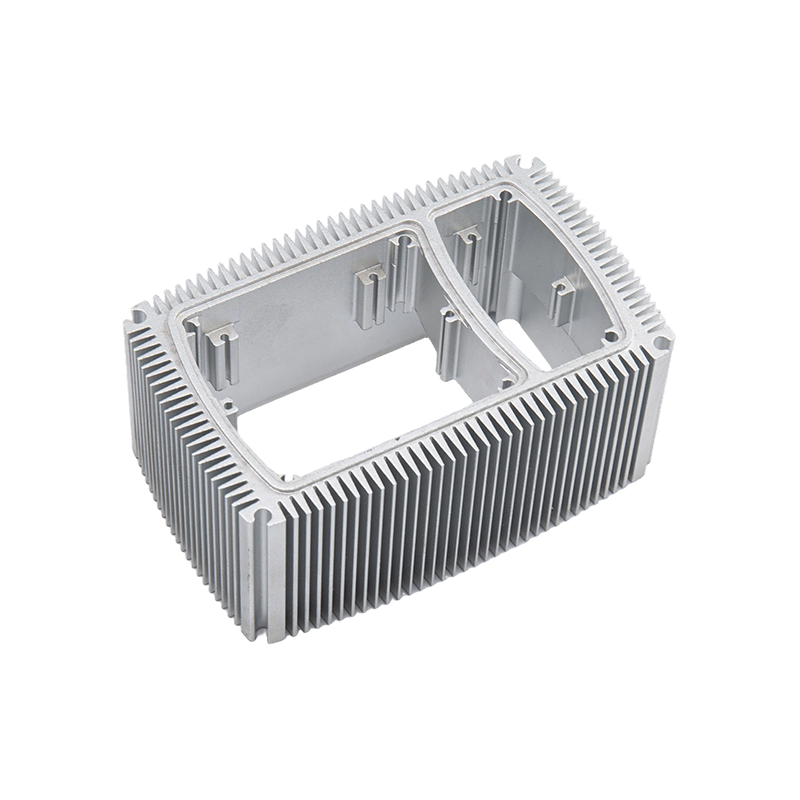
Most aluminum window frames that fail in service do not fail because the metal breaks. They fail be...
READ MORE

Heat Sink Aluminum Profiles Manufacturers
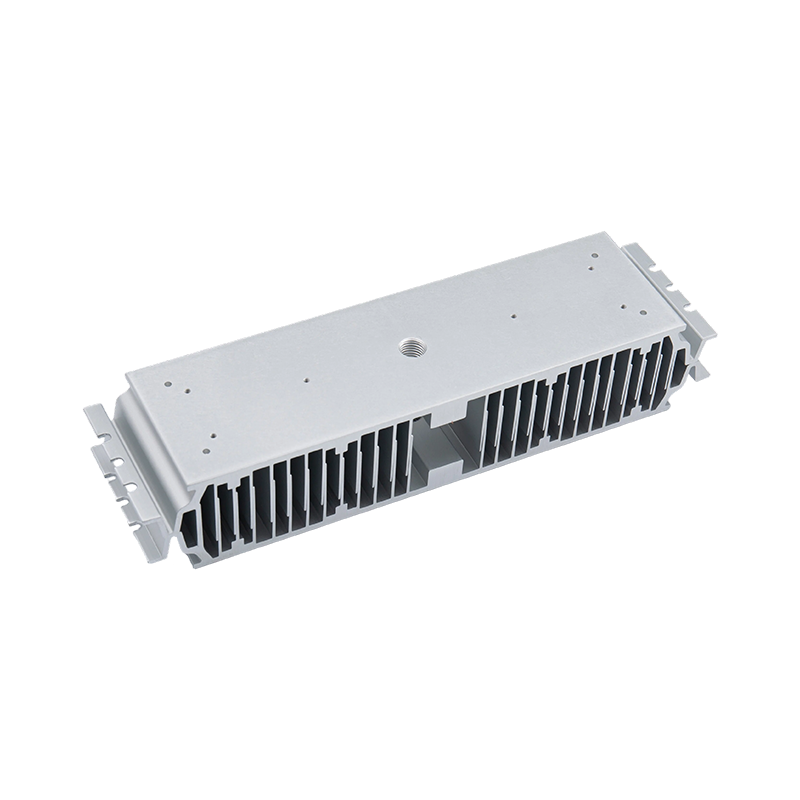
Heat sink aluminum profiles are specially shaped, lightweight metal parts made primarily from aluminum, designed to keep electronics and machinery from overheating during regular use. Many devices—such as LED lights, computer components, power supplies, and small appliances—generate heat when turned on. Too much heat can damage parts, reduce performance, or shorten a product’s lifespan. These aluminum profiles work by absorbing unwanted heat and spreading it across their surface, then releasing it into the surrounding air to keep temperatures safe and stable.
What makes them popular is their practical structure: they often feature thin, evenly spaced fins or ridges that create extra surface area without adding heavy weight. Aluminum is an ideal material because it conducts heat well, is affordable, easy to shape into consistent, long lengths (called profiles), and resists rust and corrosion. Unlike bulky or fragile cooling parts, these profiles are sturdy, long-lasting, and can be cut or fitted to different devices.
Customers don’t need technical knowledge to appreciate their value: they improve reliability, make products run cooler and quieter, and help equipment last longer. Whether used in home electronics, industrial equipment, or lighting systems, heat sink aluminum profiles act as a simple, effective protective layer against overheating. They are a dependable, low-maintenance solution for anyone looking for stable, long-term cooling performance without complexity or extra cost.
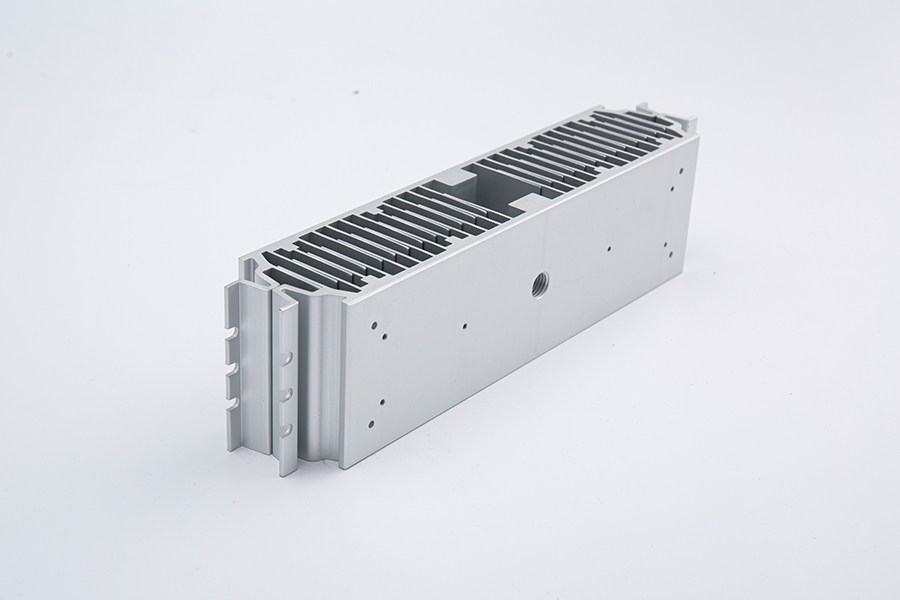
Advantages of Heat Sink Aluminum Profiles
Excellent Thermal Conductivity: Aluminum alloys used for heat sinks feature balanced thermal conductivity, efficiently transferring and dissipating heat generated by electronic components. This helps stabilize operating temperatures and supports the reliable long-term performance of devices.
Lightweight & High Strength: Compared with copper and steel, aluminum has a lower density, significantly reducing the overall weight of heat sink assemblies. Despite its light weight, it offers sufficient structural strength to resist deformation during processing, installation, and daily use.
Easy Extrusion & Customization: Aluminum is highly malleable and suitable for extrusion molding. Manufacturers can produce complex fin shapes, dense rib structures, or custom cross-sections to enhance heat dissipation area and adapt to diverse product spaces and design requirements.
Good Corrosion Resistance: Aluminum forms a thin, dense oxide film naturally, providing basic corrosion resistance. Additional surface treatments such as anodizing further improve durability, making the heat sink suitable for mildly harsh environments.
Cost-Effective & Recyclable: Aluminum is widely available and lower in cost than copper. Its extrusion process is efficient and suitable for mass production. Additionally, aluminum is highly recyclable, supporting environmentally friendly manufacturing and lifecycle management.
Dimensions of Heat Sink Aluminum Profiles
Base Dimensions: The base is the flat part that touches the heat source (e.g., a CPU or LED). Its length and width match the device’s size, usually ranging from 10mm to 500mm. A thicker base (typically 1mm–10mm) helps conduct heat better, but it also adds weight and cost.
Fin Dimensions: Fins are the thin, raised parts that dissipate heat into the air. Their key dimensions include height (2mm–25mm), thickness (0.3mm–2mm), and spacing. Taller, thinner fins with proper spacing increase surface area for better cooling, but too-tight spacing blocks airflow.
Overall Length: Standard profiles are 10mm–6000mm long, but they can be cut to custom lengths for different devices—from small phone components to large industrial equipment. Precision cutting (tolerance ±0.2mm) ensures a perfect fit.
Customization: Most dimensions are customizable. For example, pin-fin profiles have round/elliptical fins for flexible airflow, while sloped fins add surface area. These adjustments match specific cooling needs without unnecessary complexity.
Heat Sink Aluminum Profiles Color
Heat sink aluminum profiles come in many practical colors, made by surface treatments. Colors affect looks, durability, and heat dissipation, with simple choices for daily use.
Common Colors
Silver: Natural aluminum color, low cost, widely used for basic cooling parts.
Black: Most popular, better at releasing heat quietly, resists fingerprints and corrosion.
Champagne & gold: Neat look, often for LED, electronics, and home appliances.
Gray, white, bronze: Neutral tones to match device design or interior style.
Key Roles of Color
Boost heat radiation: Dark colors like black release heat slightly better than light ones.
Protect the surface: Colored oxide/coating resists scratches, rust, and fading.
Match design: Colors help the heat sink blend with devices or stand out for branding.
Custom options: Makers can match sample colors for special projects.
Simple Facts
Color comes from anodizing or powder coating, not paint that peels easily.
Light colors cost less; black and custom shades cost a bit more.
Color does not change aluminum’s basic heat conductivity, only surface heat release.
-
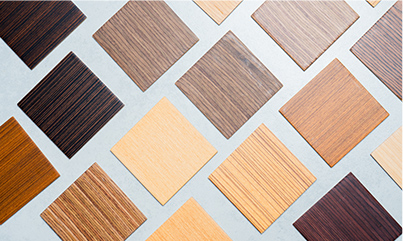
Wood Grain Color Chart
-
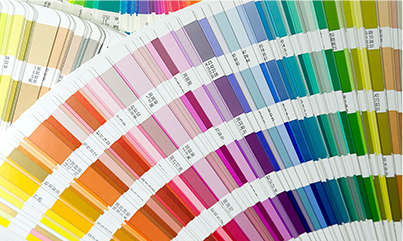
Powder Coating RAL Color Chart
-
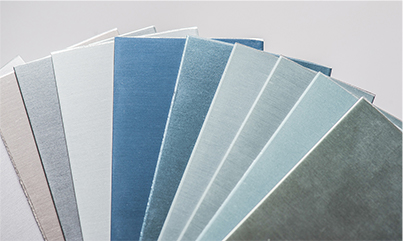
Anodizing Color Chart
Production Video
Where Aluminum Meets
the Art of Quality and Integrity
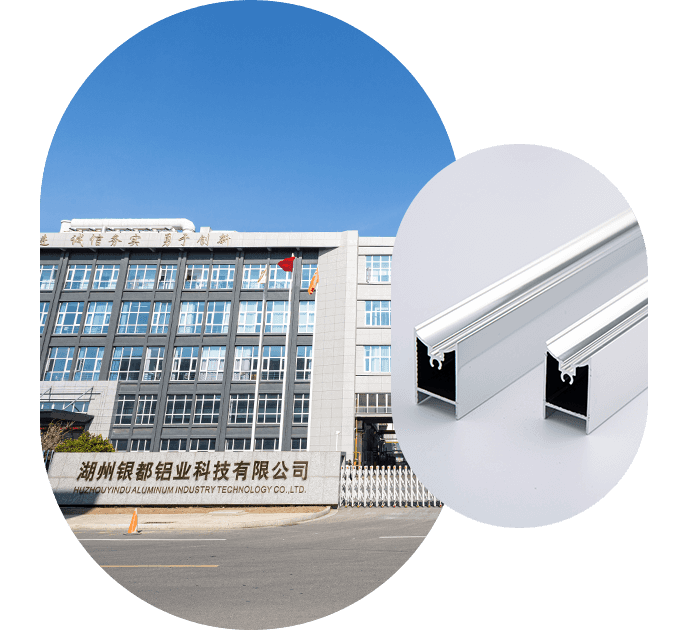
Established in 1985, Huzhou Yindu Aluminium Co., Ltd.(formerly called 721 factory of Huzhou)is a professional manufacturer of aluminium profiles. It was converted to Huzhou Yindu Aluminum Co., Ltd., and moved to Yanghua Village Zone, Nanxun Town, with a new name of Huzhou Yindu Aluminum Science and Technology Company, located in the ancient town of Nanxun, Huzhou, Zhejiang Province.
China Heat Sink Aluminum Profiles Manufacturers and Heat Sink Aluminum Profiles Factory.
Our company is a local large-scale enterprise with more than 120million yuan in capital assets,42,000 square meters of covering area, and up to 10,000 tons of annual production capacity of aluminium profiles. With over 30 years of hard work and continuous development, we already have advanced equipment and scientific management. Presently, there are many workshops, including aluminium extrusion, mechanical polishing, oxidizing staining, electrophoretic painting, powder electrostatic painting, water spray paint, doors and windows making, machinery processing, etc., as well as a quality monitoring center, which formed a complete modernized production scale of aluminium profile. Custom Heat Sink Aluminum Profiles.
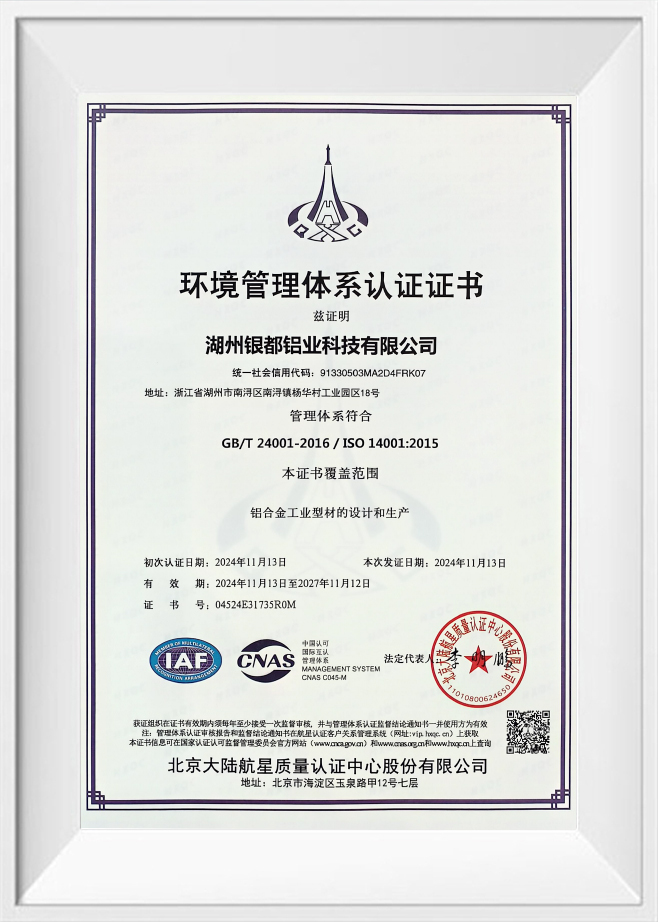
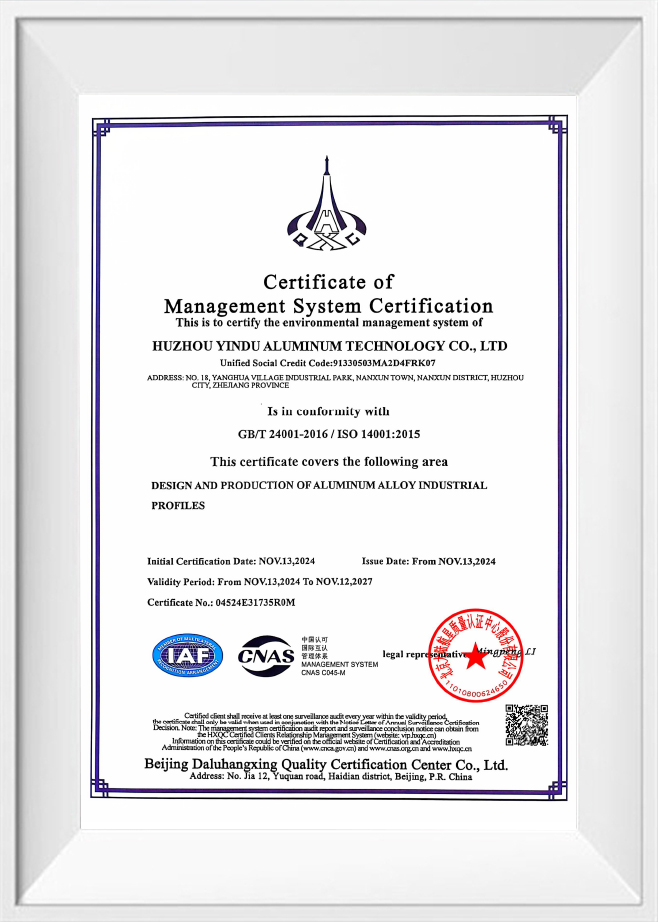
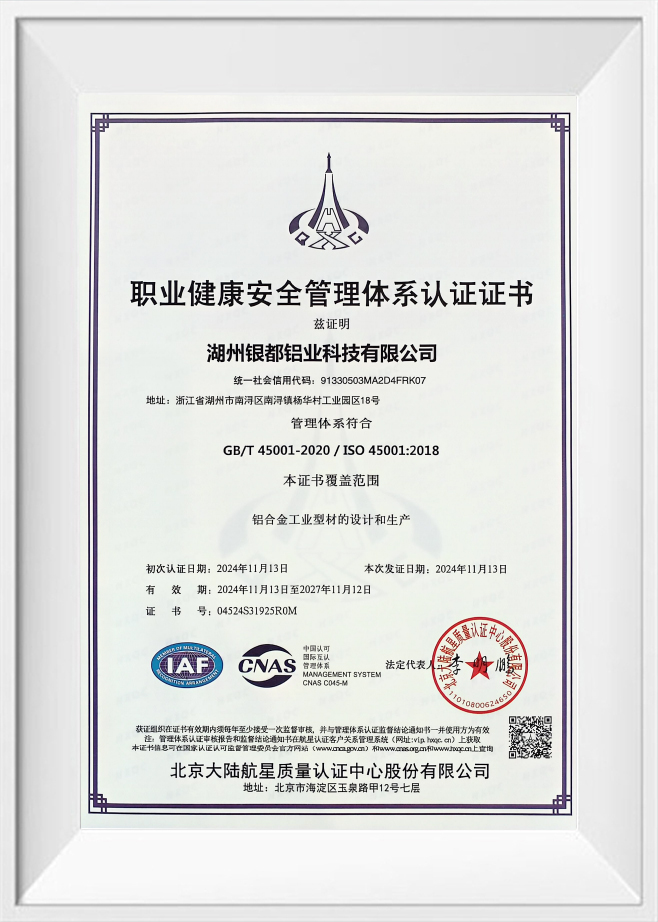
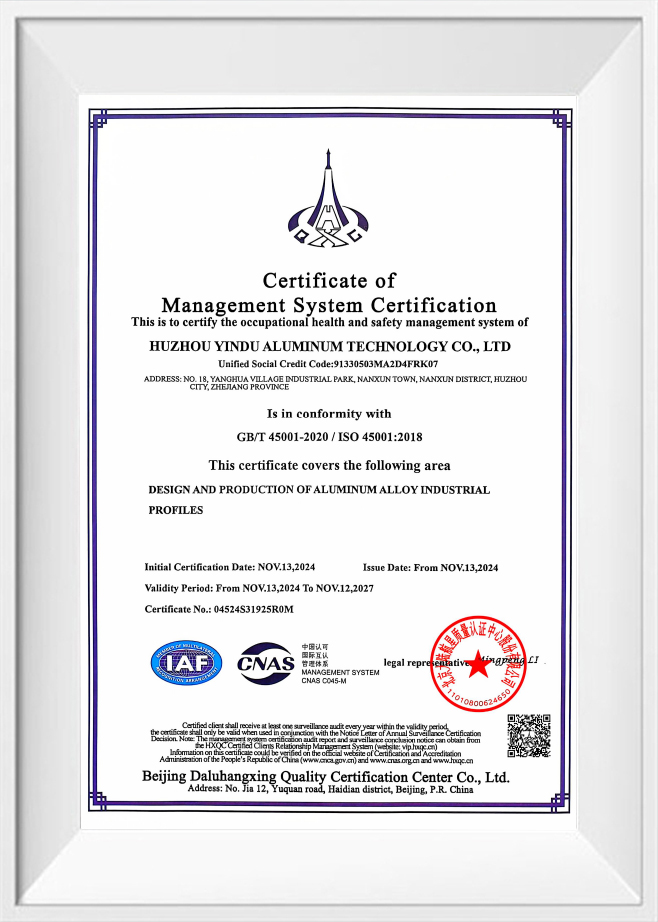
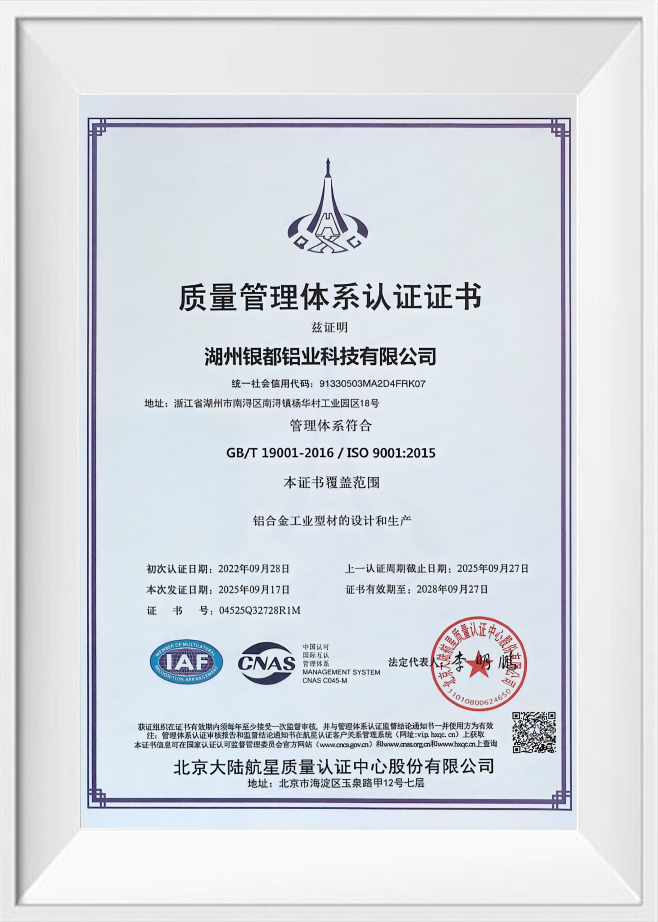
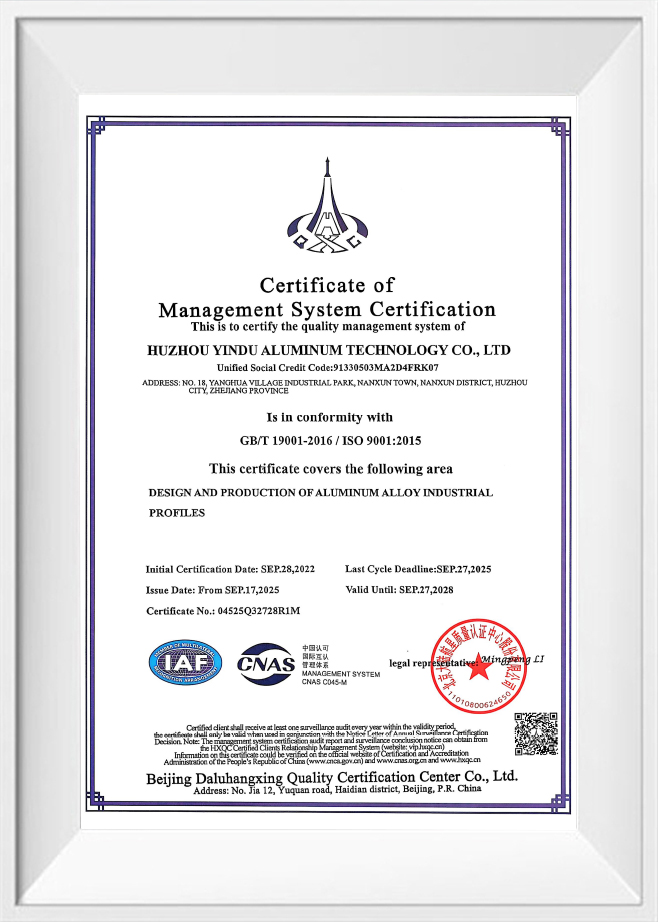
We can produce various aluminium alloy building and decorative materials according to customers’requirements; aluminium alloy tubes, rods, profiles used in industry, agriculture, vehicles, and ships. The anode oxidation and electrophoresis of aluminium alloy can produce different types of colors, such as black,bronze-colored, champagne color, imitate stainless steel color, silver-white rub sand, ordinary silvery white, hard oxidation, etc. Powder electrostatic painting can produce various tinted green aluminium profiles. The company also produces building tempered glass, escalator tempered glass, shower room tempered glass, etc. We have passed ISO9001 International Quality System, ISO 14001 environmental management system, ISO 45001 safety management system, and IATF 16949 quality management system.
Our“Yindu” products are well sold to Jiangsu, Zhejiang, Shanghai, Anhui, Shandong, Liaoning, Heilongjiang, Jilin, and other big and medium-sized cities, and some have been exported to Japan, Australia, France, Switzerland, Europe, and the United States. Quality for Credibility; Credibility for Market; Market for Reform; and Reform for Development”—This is our guide principle. Credibility is our Guarantee, Quality is our Root, and Service is our Tenet. We strive to provide reliable services for our customers with quality products, a wide variety, and reasonable prices. We hope that the “Yindu” aluminium alloy profile will become your preferred choice.
Our company is a local large-scale enterprise with more than 120million yuan in capital assets,42,000 square meters of covering area, and up to 10,000 tons of annual production capacity of aluminium profiles. With over 30 years of hard work and continuous development, we already have advanced equipment and scientific management. Presently, there are many workshops, including aluminium extrusion, mechanical polishing, oxidizing staining, electrophoretic painting, powder electrostatic painting, water spray paint, doors and windows making, machinery processing, etc., as well as a quality monitoring center, which formed a complete modernized production scale of aluminium profile. Custom Heat Sink Aluminum Profiles.
We can produce various aluminium alloy building and decorative materials according to customers’requirements; aluminium alloy tubes, rods, profiles used in industry, agriculture, vehicles, and ships. The anode oxidation and electrophoresis of aluminium alloy can produce different types of colors, such as black,bronze-colored, champagne color, imitate stainless steel color, silver-white rub sand, ordinary silvery white, hard oxidation, etc. Powder electrostatic painting can produce various tinted green aluminium profiles. The company also produces building tempered glass, escalator tempered glass, shower room tempered glass, etc. We have passed ISO9001 International Quality System, ISO 14001 environmental management system, ISO 45001 safety management system, and IATF 16949 quality management system.
Our“Yindu” products are well sold to Jiangsu, Zhejiang, Shanghai, Anhui, Shandong, Liaoning, Heilongjiang, Jilin, and other big and medium-sized cities, and some have been exported to Japan, Australia, France, Switzerland, Europe, and the United States. Quality for Credibility; Credibility for Market; Market for Reform; and Reform for Development”—This is our guide principle. Credibility is our Guarantee, Quality is our Root, and Service is our Tenet. We strive to provide reliable services for our customers with quality products, a wide variety, and reasonable prices. We hope that the “Yindu” aluminium alloy profile will become your preferred choice.
HONOR & CERTIFICATION
Certificate
What's News
-
Aluminum Window Frame Material Guide: Alloy, Wall Thickness, Finishes, and Thermal Breaks
-
Aluminum Physical Properties and Chemical Properties: A Practical Engineering GuideWhen a design engineer specifies an aluminum profile for an elevator car, a heat sink, or a shower ...READ MORE
-
Aluminum Frame for Solar Panel: Alloy, Finish, Tolerance & Sourcing GuideAn extrusion supplier calls you with a simple question: should the aluminum frame for your solar pa...READ MORE
-
Aluminium Structure for Solar Mounting: A Practical Material Guide and Selection TipsImagine servicing a solar array on a rooftop in a humid, salt-air environment. Five years after ins...READ MORE
-
Anodized Finish Guide: Process Types, Coating Thickness, and Quality ControlAnodized finish is not a layer applied on top of aluminum. It is the aluminum surface itself, conve...READ MORE

Address
No. 18, Industrial Park, Yanghua Village, Nanxun Town, Nanxun District, Huzhou City, Zhejiang Province, China
Quick Menu
Subscribe newslatter
Copyright © Huzhou Yindu Aluminum Technology Co. , Ltd. Rights Reserved.

Custom Heat Sink Aluminum Profiles Factory

