


 English
 Français
 中文简体

Anodized Aluminum Extrusions: Types, Thickness Grades, and Alloy Choices
Content
- 1 What Anodizing Does to an Extruded Profile
- 2 Why Anodized Profiles Outlast Applied Coatings
- 3 Type I, Type II, and Type III: Matching Designation to Duty
- 4 Alloy Choice Sets the Color Before the Dye Does
- 5 Holding Color and Thickness Steady Across Batches
- 6 Where Anodized Extrusions Do Real Work
- 7 A Procurement Checklist Before the Order Is Released
- 8 Cleaning Anodized Surfaces Without Damaging Them
Two extrusion runs leave the same die on the same shift. One returns from the anodizing line with an even champagne tone; the other comes back milky on one face and darker along the weld line. The anodizer usually takes the blame, but the cause is more often upstream: alloy chemistry, quench rate, die condition, or the way the profiles sat on the rack.
The short answer first: anodized aluminum extrusions are not coated metal. Anodizing converts the outer skin of a profile into an aluminum oxide layer grown from the aluminum itself, which is why the finish resists chipping, holds color outdoors, and can be dyed, sealed, or hardened for wear. Holding that result steady across batches depends on decisions made long before the racks enter the tank.
What Anodizing Does to an Extruded Profile
Inside the tank, the extrusion becomes the anode in a dilute acid electrolyte. Direct current drives oxygen to the surface, where it bonds with aluminum to form aluminum oxide. The layer grows into the metal as well as outward from the original surface, so a finished profile measures larger than the raw extrusion by a fraction of the coating thickness on every face. A 20 micron coating can add roughly 8 to 10 microns per side, enough to matter on a press fit or a sliding joint.
Two structural details drive everything else. The as-formed oxide is porous, and those microscopic pores accept organic dye to produce champagne, bronze, black, or a custom color. The pores then have to be closed. Sealing in hot deionized water, nickel acetate, or a cold nickel-fluoride system locks the dye in and restores corrosion performance. Poor sealing shows up later: a profile that passed a salt spray check in the lab can discolor within a season outdoors.
Why Anodized Profiles Outlast Applied Coatings
- Corrosion resistance: a properly sealed oxide layer is chemically stable, and anodized 6063 and 6061 profiles routinely pass several hundred hours of neutral salt spray testing.
- Impact and abrasion: the oxide is harder than the aluminum beneath it and integral to the surface, so it cannot peel or flake at a dented edge the way a paint film can.
- Color stability: the finish is inorganic and does not chalk under ultraviolet exposure the way many organic coatings do.
- Dielectric surface: the anodic layer does not conduct electricity, which suits socket housings and other electrical profiles where the surface has to isolate.
- Maintenance: mild soap, warm water, and a soft cloth restore the surface. No waxing and no touch-up.
Two trade-offs belong on the drawing. Anodic oxide is a thermal barrier, so a heat sink should carry only a thin Type II layer, typically 5 to 10 microns, unless the surface genuinely needs wear resistance. Hard anodizing at 40 to 50 microns survives abrasion far better but adds measurable thermal resistance and reduces fatigue strength at sharp corners. The second trade-off is dimensional: because the layer builds on every surface, hard anodized parts need generous tolerances and usually masking on threads and bores.
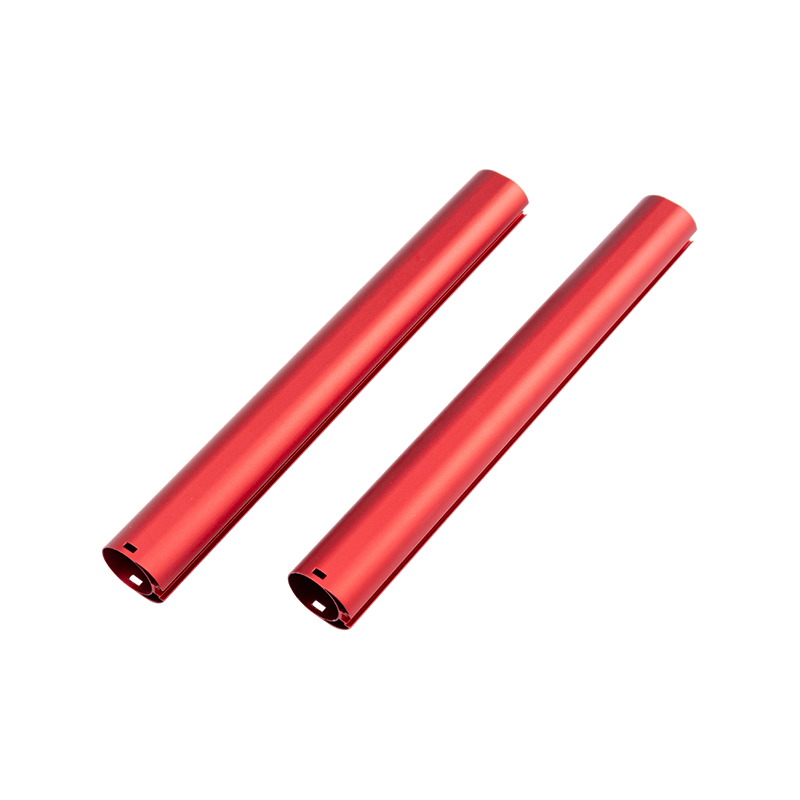
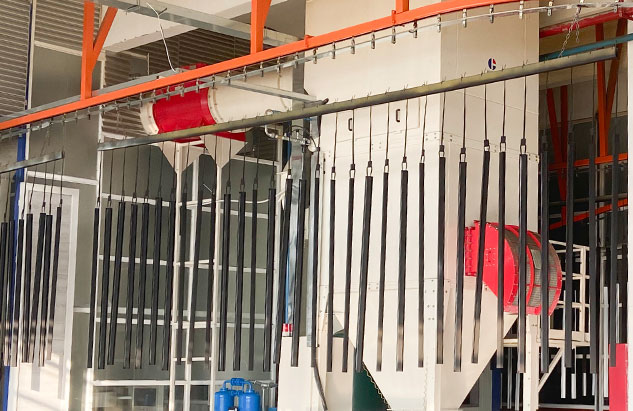 Hard Anodizing Service for Aluminum Alloy ComponentsUse for thick wear-resistant oxide layers, with process control, sealing, and thickness options suited to demanding automotive, aerospace, machinery, and tooling parts.View Product →
Type I, Type II, and Type III: Matching Designation to Duty
Most specifications reference MIL-A-8625 or an equivalent standard, and the type number tells the finisher which electrolyte and thickness range to work with.
| Designation | Electrolyte | Typical thickness | Surface hardness | Where it fits |
|---|---|---|---|---|
| Type I, chromic acid | Chromic acid | 0.0001 to 0.0007 in (2.5 to 18 microns) | Low | Thin layers on fatigue sensitive or complex parts, with minimal dimensional change |
| Type II, sulfuric acid | Sulfuric acid | 0.0002 to 0.0010 in (5 to 25 microns) | Moderate | Architectural, appliance and general corrosion resistance, and the base for most dyed colors |
| Type III, hard anodize | Sulfuric acid, lower temperature | 0.0005 to 0.0045 in (13 to 114 microns), often 2 mil | High, roughly 400 to 500 HV | Wear surfaces, sliding components and parts that must resist abrasion |
Class adds a second dimension: Class I means undyed, Class II means dyed. Architectural projects often go further and write an AA designation such as AA-M12C22A41 into the purchase order, which pins down coating thickness together with color and gloss instead of leaving appearance to the finisher's judgment.
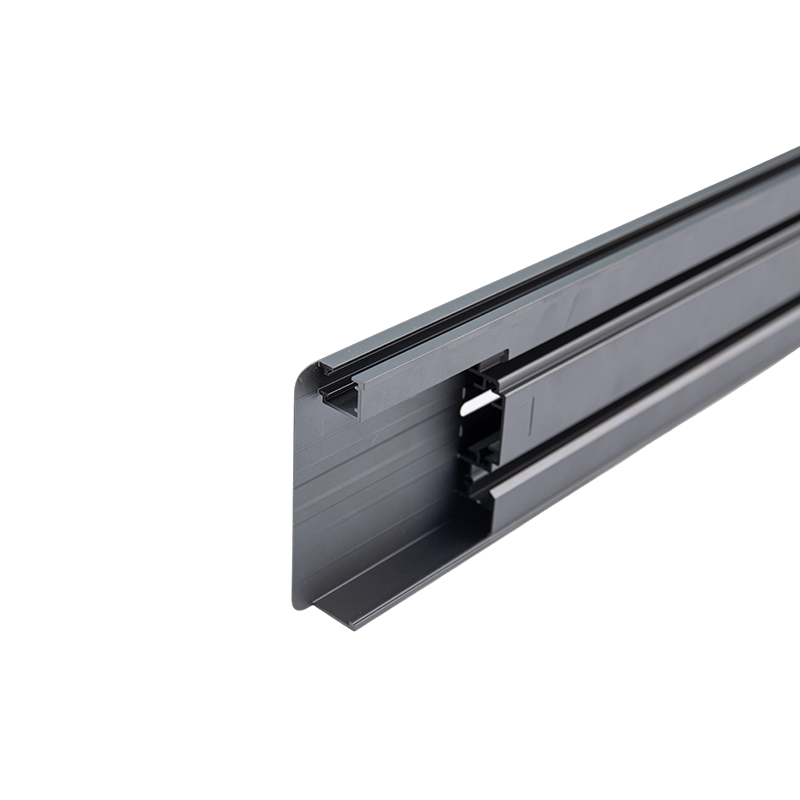
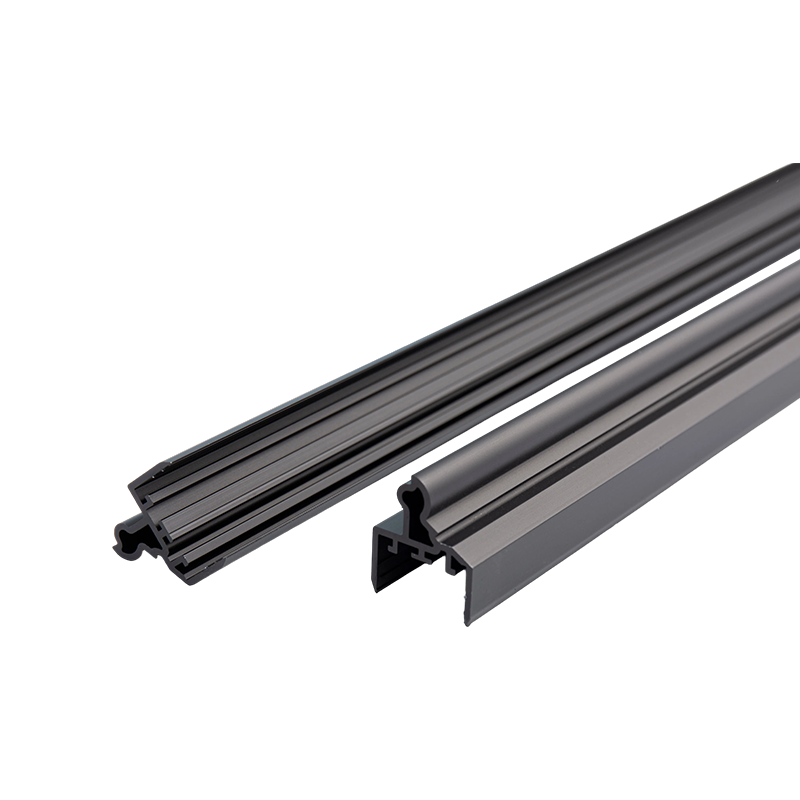
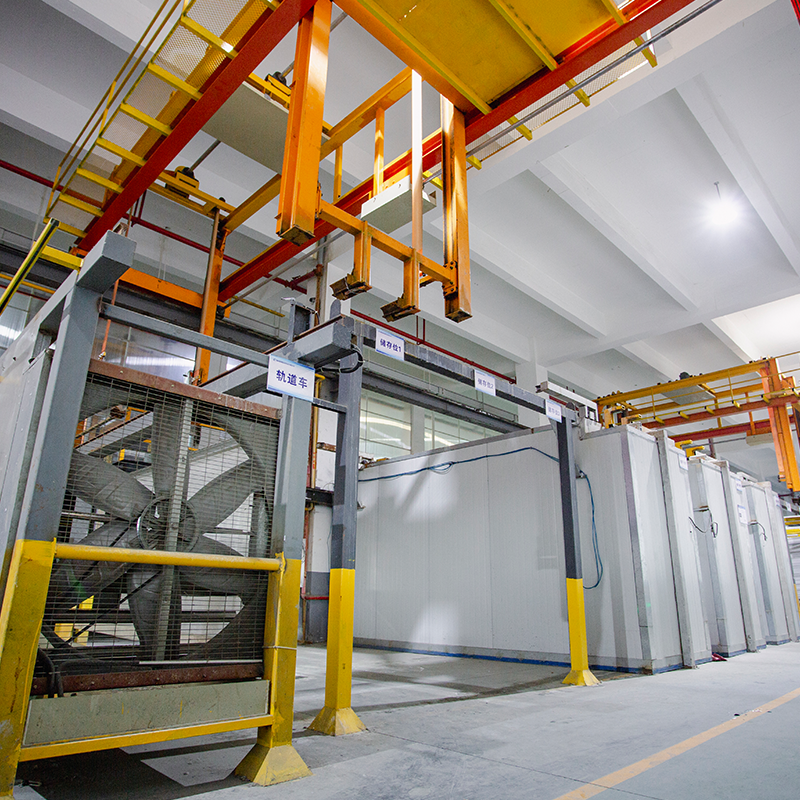 Anodized Aluminum Extrusion Profiles with Color and Thickness OptionsOffers silver-white, black, bronze, champagne and secondary dye colors, multiple anodizing thickness grades, fabrication, and applications from architecture to electronics.View Product →
Alloy Choice Sets the Color Before the Dye Does
Anodizing amplifies whatever is in the alloy. Copper, iron, silicon and manganese all influence the tone of the oxide, so two profiles that look identical on the press can finish two shades apart.
- 6063 is the workhorse extrusion alloy and takes clear or dyed sulfuric anodizing cleanly.
- 6463 keeps iron and silicon low so it anodizes bright rather than gray, which is why it serves decorative trim and appliance beads.
- 6061 is stronger and machines well, but its alloying elements push the coating toward a warmer gray that limits color matching.
- 7xxx alloys will anodize but generally finish dark, and high-copper 2xxx alloys are poor candidates for decorative work.
Process history shows up in the tank as well. Uneven quench, a cold die, or a low exit temperature can leave streaks and flow lines that stay invisible after extrusion and become obvious after anodizing. That is why the extrusion process and alloy selection guide is worth reading before a new profile is quoted, not after a batch has been rejected at the anodizing line.
Holding Color and Thickness Steady Across Batches
Consistency is process discipline rather than a promise. Three controls do most of the work.
- A physical master sample, stored away from sunlight and handling, used to judge every run under the same light. A D65 viewing booth and a shop window will disagree, and the booth is the one that counts.
- A numeric color tolerance, usually written as a Delta E limit agreed in writing before the first batch ships.
- Dye lot control, with bath chemistry, dye concentration, temperature and immersion time recorded for each load so a deviation can be traced instead of guessed.
Rack marks deserve a decision up front too. Every contact point leaves bare aluminum, because no current flows where the rack touches the profile. On elevator car panels or shower enclosure profiles, those marks should be planned onto hidden faces, inside returns, or cut-off ends. Finding a rack mark on a visible face after sealing costs the whole batch.
Where Anodized Extrusions Do Real Work
Anodized profiles earn their place wherever appearance and durability are judged together.
- Elevator car and shaft profiles: high-traffic cabs need surfaces that survive cleaning chemicals and constant hand contact without scuffing.
- Heat sinks: LED and power electronics housings use anodized heat sink profiles for corrosion protection with a controlled thermal penalty.
- Heaters and vacuum tubes: elevated service temperatures favor a stable oxide layer over a polymer coating.
- Kitchenware: matte anodized profiles resist scratching and tolerate higher temperatures than painted alternatives.
- Shower enclosures, towel racks and sockets: colored anodizing covers bathroom fixtures, while precision extrusion keeps socket profiles dimensionally tight.
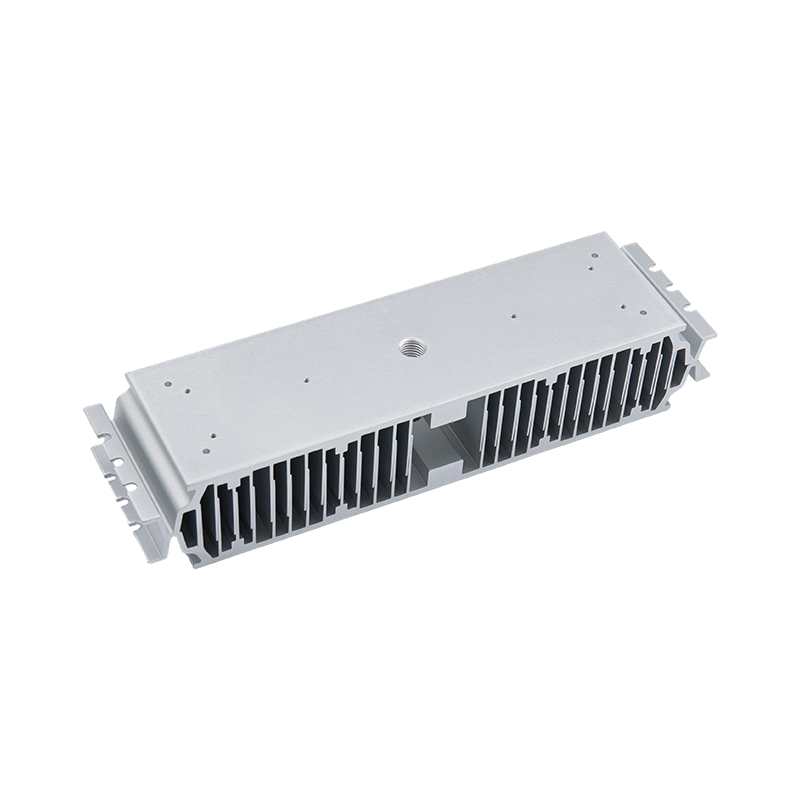
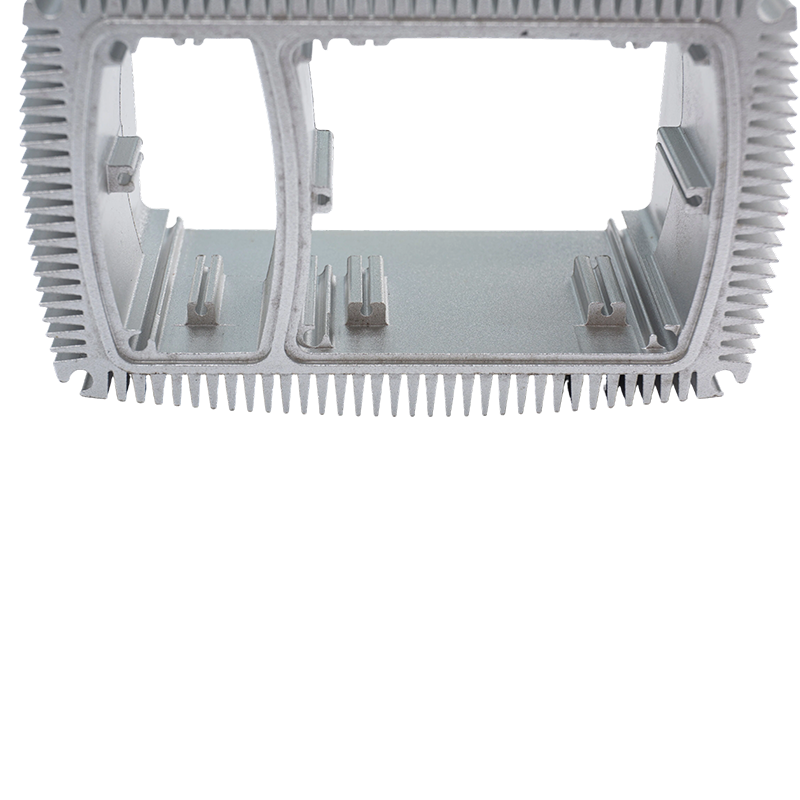 High Thermal Conductivity Anodized Aluminum Heat Sink ProfilesThis listing presents the anodized aluminum heat sink profile for buyer inquiry, with specification, parameters, and company profile sections to review.View Product →
A Procurement Checklist Before the Order Is Released
- Name the alloy and temper, not just "aluminum". 6063-T5 and 6061-T6 anodize to different colors and machine differently.
- State the anodize type, class and thickness range by standard, for example Type II, Class II, 0.0004 to 0.0007 in.
- Attach a physical color master and a Delta E limit rather than a photograph or a written description.
- Decide the machining sequence. Cutting or tapping after anodizing exposes bare metal; masking before anodizing adds cost but keeps a clean appearance.
- Set the corrosion test method and hours, typically neutral salt spray to ASTM B117.
- Mark racking locations and the maximum acceptable contact mark on cosmetic faces, and allow for dimensional growth on every mating surface.
A specification that covers those six points holds up in a dispute, because each one can be measured rather than argued about.
Cleaning Anodized Surfaces Without Damaging Them
Mild dish soap, warm water and a soft cloth handle almost every situation. Avoid alkaline cleaners, ammonia based glass sprays, bleach and abrasive pads, because strong alkali attacks the sealed oxide and dulls the finish permanently. Outdoors, rinse salt and construction dust away rather than scrubbing it across the surface. Anodized profiles never need wax, and repainting is not part of their maintenance routine at all.
Anodized aluminum extrusions work best when the finish is specified as an engineering requirement rather than a color swatch. Alloy, type, thickness, sealing and racking all leave fingerprints on the final part, and each of them can be written into the drawing before production starts.
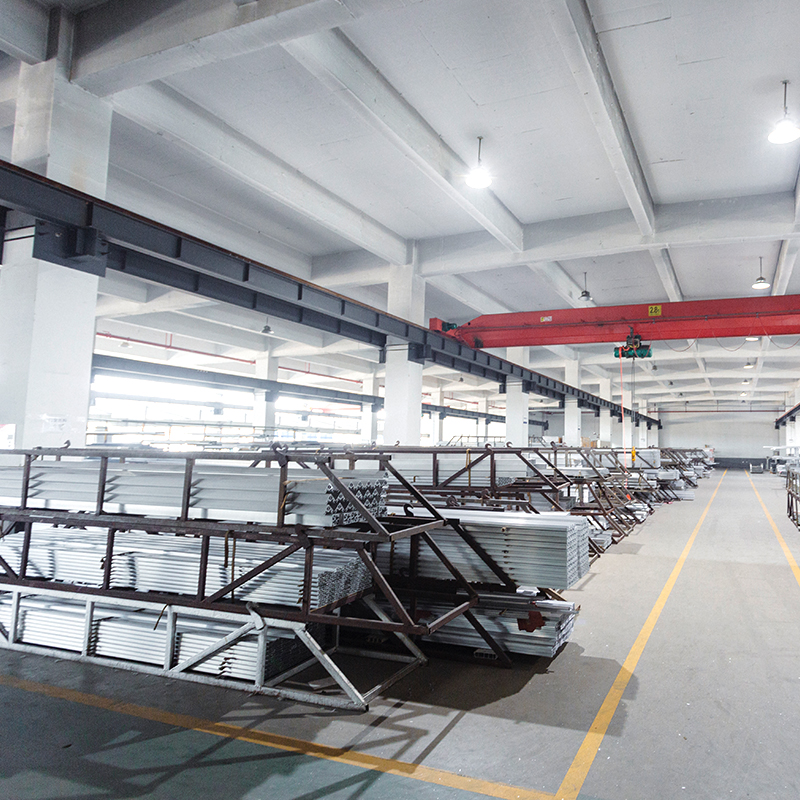
Yindu Aluminum has extruded and finished aluminum profiles in Nanxun, Zhejiang since 1985, running anodizing, hard anodizing, powder coating, PVDF coating and CNC machining under one roof with a capacity of about 10,000 tons of profiles a year. If a drawing already calls for a specific alloy and anodize class, the next step is confirming the extrusion and finishing route, and our aluminum profile range lists the standard shapes we produce in-house for elevators, heaters, kitchenware and bathroom fittings.
Previous Post
Anodized Aluminum Parts: How Alloy, Coating Type, and Sealing Decide Performance
Next Post
Aluminum Window Frame Profile: Alloy, Finish, and Tolerance Guide for Buyers

Address
No. 18, Industrial Park, Yanghua Village, Nanxun Town, Nanxun District, Huzhou City, Zhejiang Province, China
Quick Menu
Subscribe newslatter
Copyright © Huzhou Yindu Aluminum Technology Co. , Ltd. Rights Reserved.
 Custom Aluminum Extrusions Manufacturers

