


 English
 Français
 中文简体

Aluminum Window Frame Profile: Alloy, Finish, and Tolerance Guide for Buyers
Content
- 1 What a Window Frame Profile Set Actually Contains
- 2 Alloy and Temper: The Two Choices That Set Everything Else
- 3 Wall Thickness, Tolerances, and the Standards Behind Them
- 4 Surface Finish Systems: Matching the Coating to the Climate
- 5 Thermal Breaks, Condensation, and Energy Compliance
- 6 Coastal, High-UV, and Wood-Grain Projects
- 7 Fabrication Steps That Drive Cost
- 8 What to Lock Down Before the Order
- 9 Putting the Specification Together
A purchasing manager sends out an RFQ for 6,000 meters of window frame profile: 6063-T5, 1.4 mm nominal wall, clear anodized to 15 micrometers, cut to 6.1 m lengths. Three quotes come back. The spread is 22 percent, and only one supplier asks what the window will be assembled into.
Fix four things before you negotiate: alloy and temper, wall thickness at the load points, dimensional tolerance, and the finish system. Once the die is cut, changing any of them costs far more than the gap between the highest and lowest quote on the table.
What a Window Frame Profile Set Actually Contains
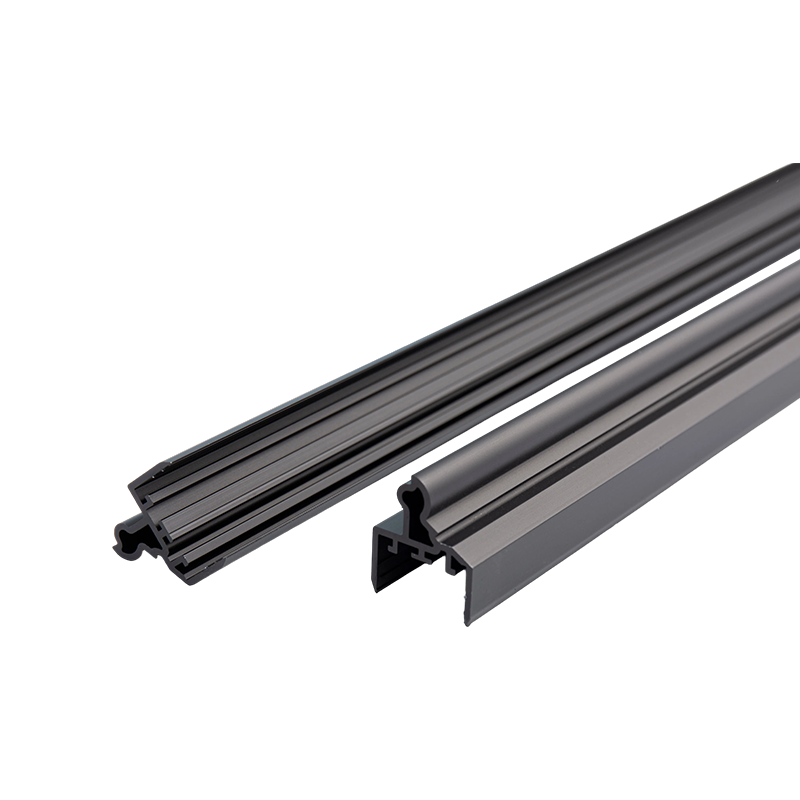
"Window frame profile" is rarely a single shape. A casement or sliding window uses six to ten extrusions that must fit together: outer frame, sash, mullions and transoms, glazing bead, a sill with a drainage channel, and often a screen track. A thermally broken system adds two aluminum halves joined by a polyamide strip.
The drawing matters more than the alloy grade at this stage. Screw ports, hinge reinforcements, and corner-crimp zones need 1.8 mm to 2.0 mm of wall; visible frame faces usually run 1.2 mm to 1.4 mm. A die that fills both extremes unevenly shows the variation at the thin section first, either as a sink mark on the face or as a screw port that strips during assembly.
Hollow chambers are the second constraint. Most frames run through a porthole or bridge die, come out with a welded seam, and carry a slightly wider tolerance band than a solid shape. Redesigning a non-visible part as solid or semi-hollow simplifies the die and usually lowers the per-meter price.
Alloy and Temper: The Two Choices That Set Everything Else
6063-T5 covers most architectural window frames for practical reasons: it extrudes fast, anodizes evenly, and delivers roughly 150 to 190 MPa tensile strength with about 8 percent elongation, enough for a frame that holds glass, takes wind load, and survives repeated opening cycles without cracking at the corner joint.
- 6063-T5: the default for anodized and powder-coated residential and commercial windows.
- 6060-T5: common in European specifications, slightly lower strength and a slightly better anodized surface.
- 6005A-T6: higher strength for wide spans and heavy commercial systems, slower to extrude.
- 6061-T6: about 310 MPa tensile strength, used for structural mullions and high-wind jobs, but it anodizes less uniformly and usually ends up painted.
Temper deserves equal attention. T5 is air-cooled at the press; T6 is water-quenched for higher strength. Water quenching distorts thin, asymmetric window profiles more, so a T6 frame often needs straightening and can carry more residual stress. Unless the loads demand T6, T5 usually gives a straighter profile at a lower price.
Process control caps what is achievable. Billet quality, billet temperature, extrusion speed, and quenching all interact, and a supplier who runs window dies fast to cut cost will show it as dimensional drift along a 6 m length. The background on how alloy and process choices shape the finished profile is covered in this guide to aluminum extrusion process and alloy selection.
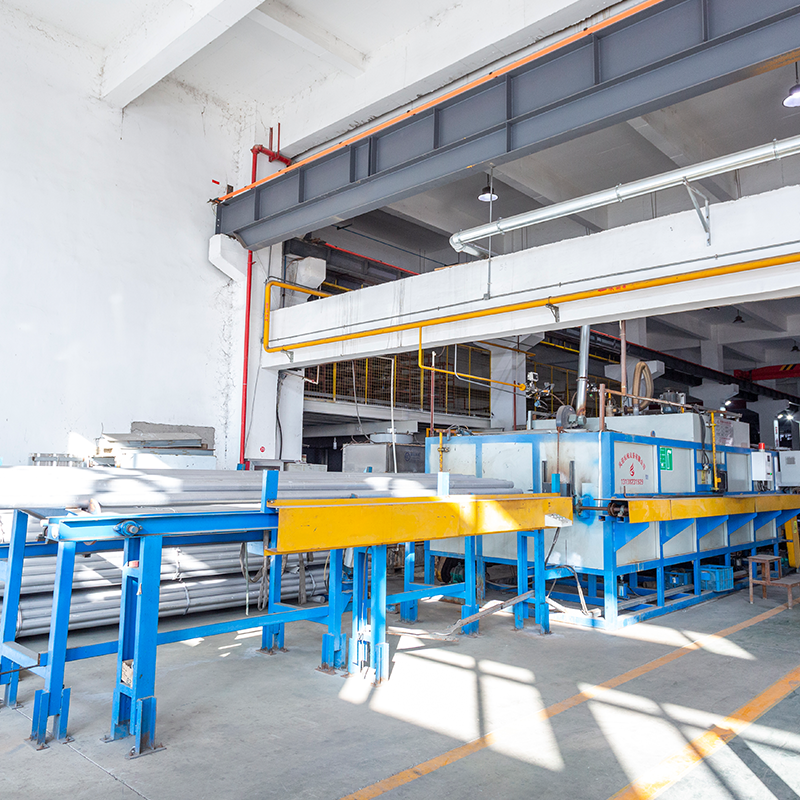 Aluminum Extrusion Profiles: Standard and Custom ShapesReview alloy options, standard and custom profiles, surface finishes, and machining services, with regional standards noted for specifying orders.View Product →
Wall Thickness, Tolerances, and the Standards Behind Them
Three regional standards cover most orders: GB/T 5237.1, EN 755-9, and ASTM B221. They agree on the broad requirements and differ in the detail, so name the standard and edition on the purchase order instead of leaving it to the supplier to assume.
Expect roughly ±0.3 to ±0.5 mm on a 50 to 60 mm overall dimension, and ±0.10 to ±0.15 mm on a 1.4 mm wall. Twist attracts less attention than it deserves: a profile that is dimensionally perfect but twisted by 1 mm per meter will fight every mitre joint on the assembly line.
- Overall dimensions and wall thickness at three points along a full-length piece
- Twist, bow, and camber measured against a flat plate
- Cut length and cut angle on a sample of mitred pieces
- Screw port depth, pilot hole diameter, and hardware fit
- Coating thickness on the visible face and finish quality inside corners and drainage slots
Ask for a first-article inspection report against the drawing rather than a general certificate. Anodized and coated batches also vary in color, so sign off a physical color chip and keep it on file.
Surface Finish Systems: Matching the Coating to the Climate
The finish decides how the window looks in year one and in year fifteen, and it is the part of the specification most often reduced to one word. Build thickness, resin chemistry, and pretreatment all change performance, and the difference appears only after a few summers of UV exposure.
| Finish | Typical build | Look and durability | Best suited to |
|---|---|---|---|
| Clear or bronze anodizing | 10 to 25 micrometers (AA15 to AA25) | Metallic, hard surface; color is stable but batch variation is visible | Inland residential and commercial windows |
| Polyester powder coating | 60 to 80 micrometers | Any RAL or custom color, satin to matte, good mechanical resistance | General residential windows |
| Superdurable powder or PVDF | 60 to 80 micrometers powder; 23 to 27 micrometers PVDF | Best UV and salt-spray performance, AAMA 2605 class | Coastal sites, high-rise facades, strong sun |
| Wood-grain sublimation | Powder base plus transfer layer | Warm timber look without the maintenance of real wood | Renovation, interiors, matched joinery |
Two rules follow. Match the coating to the exposure rather than the budget line: a 60 micrometer polyester powder on a beachfront facade will chalk long before a PVDF coating fails, though both look identical on a sample board. Then verify pretreatment, because the conversion coating that makes the finish adhere is invisible in the delivered profile.
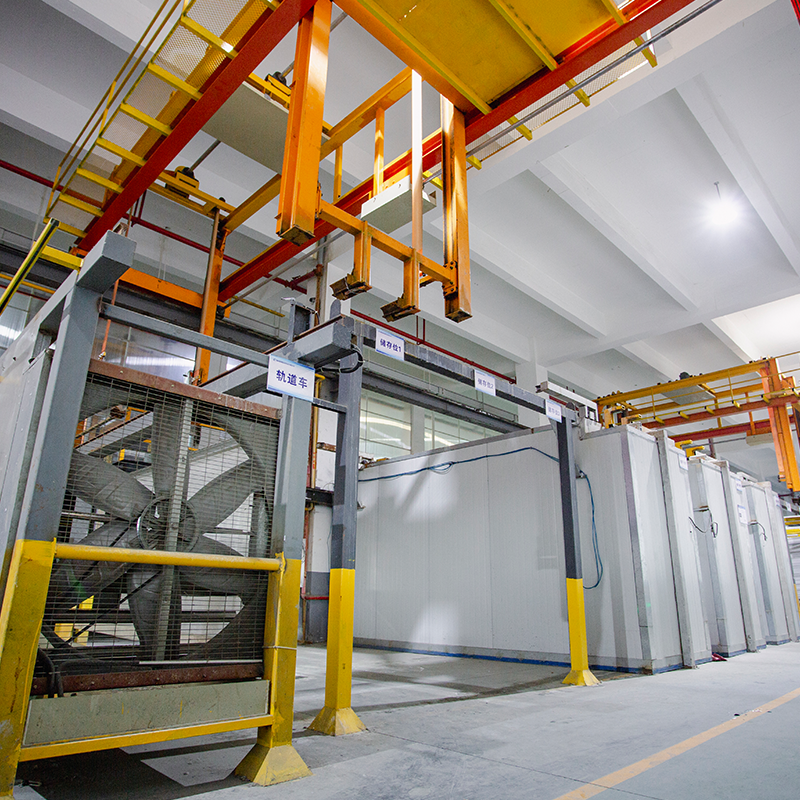 Anodized Aluminum Extrusions for Architectural and Industrial ApplicationsAnodized aluminum extrusions with AA10–AA25 oxide layers, color options, CNC fabrication, and corrosion-resistant finishes for architecture and industry.View Product →
Thermal Breaks, Condensation, and Energy Compliance
Aluminum conducts heat at around 200 W/m·K, which is exactly what a cold-climate window frame should not do. An unbroken aluminum frame sits near 5.8 W/m²K, and that number shows up as condensation on the interior surface and as a heating bill.
A thermal break separates the interior and exterior halves with a glass-fiber-reinforced polyamide strip, usually PA66GF25 and 14 mm to 34 mm wide. The finished frame then lands roughly between 1.8 and 2.8 W/m²K, depending on chamber count, strip width, and the glazing it carries.
Two details catch buyers out. The strip must be mechanically locked and crimped with controlled force, and EN 14024 is the test that proves the bond; over-crimping deforms the polyamide and creates a cold path, while under-crimping shows up in winter as a line of condensation. Compliance is also judged on the whole window, so ask for a calculated or tested U-value for the complete system.
Coastal, High-UV, and Wood-Grain Projects
Salt spray separates coating classes more sharply than color or gloss. AAMA 2604 powder is tested to about 1,500 hours; AAMA 2605 systems, including PVDF, reach roughly 4,000 hours. On a seafront project that gap is the difference between a warranty claim in year six and no claim at all.
Inland projects have more freedom on appearance. Wood-grain finishes deliver a timber look without the sanding, staining, and rot that real timber brings, which is why they appear so often in renovations and interiors that must match existing joinery. The process transfers a pattern onto a cured powder base, so wear resistance depends on the base layer as much as on the grain. More detail on how these hold up is in this article on wood finish aluminum extrusions.
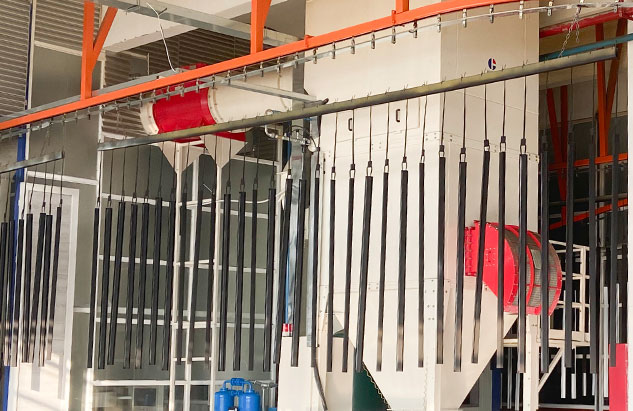 Custom Powder Coated Aluminium Extrusion Profiles by YinduExplore RAL, PANTONE, or custom powder-coated aluminum extrusions with smooth, sandy, or metallic finishes for windows, furniture, lighting, and industrial parts.View Product →
Fabrication Steps That Drive Cost
From billet to packed frame, the profile passes through extrusion, stretching, cutting, artificial aging, finishing, and often machining. Every step adds cost, and every step can add rework if the previous one drifted.
Machining is where window profiles stop being simple. Drainage slots, hinge pockets, screw bosses, weatherstrip grooves, and end-mill cuts for corner cleats each carry their own tolerance. A slot 0.3 mm off centre is harmless alone and a problem when it stacks with a drill position on the assembly jig. Suppliers who machine in the same plant as they extrude can correct the drawing early; those who subcontract usually cannot.
Packaging fails expensively. Powder-coated profiles need film that peels cleanly after months in storage, anodized profiles need interleaving against transit scratches, and 6 m bundles need proper support so they do not bow inside a container.
What to Lock Down Before the Order
- Die ownership and whether the die stays exclusive to your profile
- Minimum order quantity per profile and per color batch, since anodizing and coating runs are charged by rack load
- Signed color chips retained for each finish and each batch
- Sampling plan: first article plus dimensional checks at a stated frequency
- Test documentation for alloy composition, hardness, coating thickness, and salt spray
- Packaging specification and storage protection
- Lead time split between die making, typically two to four weeks, and production and finishing, typically three to five weeks
Putting the Specification Together
The quote that looks 22 percent cheaper usually differs on one of four points: a lighter wall at the screw ports, a thinner coating, a lower alloy grade, or a looser twist tolerance. None of them show up in a photograph of a sample.
Write the specification around the window rather than the profile: alloy and temper, wall thickness at each functional zone, standard and tolerance class, finish system with its test class and build thickness, and fabrication and packing requirements. Then hold a first-article sample in your hands before the die goes into production. That conversation takes an afternoon. The one that starts when 6,000 meters arrive and the mitres will not close takes a good deal longer.
Previous Post
Anodized Aluminum Extrusions: Types, Thickness Grades, and Alloy Choices
Next Post
Aluminum Window Frame Material Guide: Alloy, Wall Thickness, Finishes, and Thermal Breaks

Address
No. 18, Industrial Park, Yanghua Village, Nanxun Town, Nanxun District, Huzhou City, Zhejiang Province, China
Quick Menu
Subscribe newslatter
Copyright © Huzhou Yindu Aluminum Technology Co. , Ltd. Rights Reserved.
 Custom Aluminum Extrusions Manufacturers

