


 English
 Français
 中文简体
中文简体
Aluminum Window Frame Material Guide: Alloy, Wall Thickness, Finishes, and Thermal Breaks
Content
Most aluminum window frames that fail in service do not fail because the metal breaks. They fail because the material specification was wrong at the drawing stage. Aluminum window frame material is not one product. It is a combination of alloy temper, wall thickness, surface treatment, and, where heating loads matter, thermal break construction. Every one of those variables changes the frame's cost, lifespan, and behavior on site. This guide explains which combinations work, what numbers to check, and why the cheapest quote is often the most expensive decision.
Which Aluminum Alloy Is Used for Window Frames?
6063 alloy in T5 or T6 temper accounts for nearly all extruded aluminum window frame material on the market. It became the standard because it flows through complex hollow dies without tearing, welds cleanly, anodizes evenly, and paints well. For most residential window sections it provides more than enough strength. The few sectors that need extra capacity use 6061, which is stronger but harder to extrude and less forgiving on surface quality.
| Alloy and Temper | Minimum Yield Strength | Typical Use |
|---|---|---|
| 6063-T5 | 110 MPa | Residential sashes, balcony doors, internal partitions |
| 6063-T6 | 160 MPa | Large sashes, wide mullions, high-wind coastal zones |
| 6061-T6 | 240 MPa | Industrial glazing, heavy structural frames |
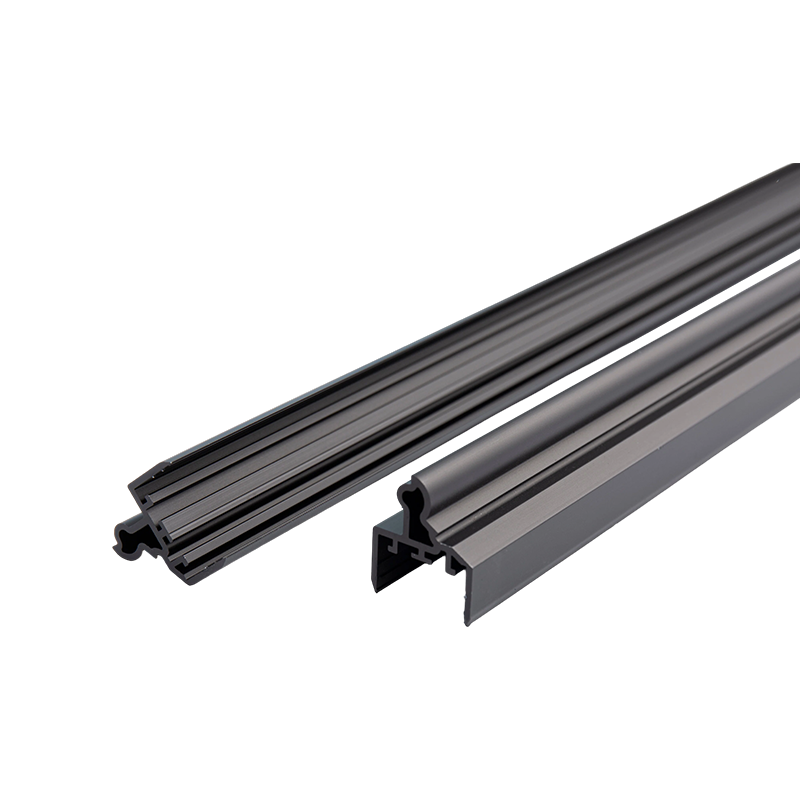
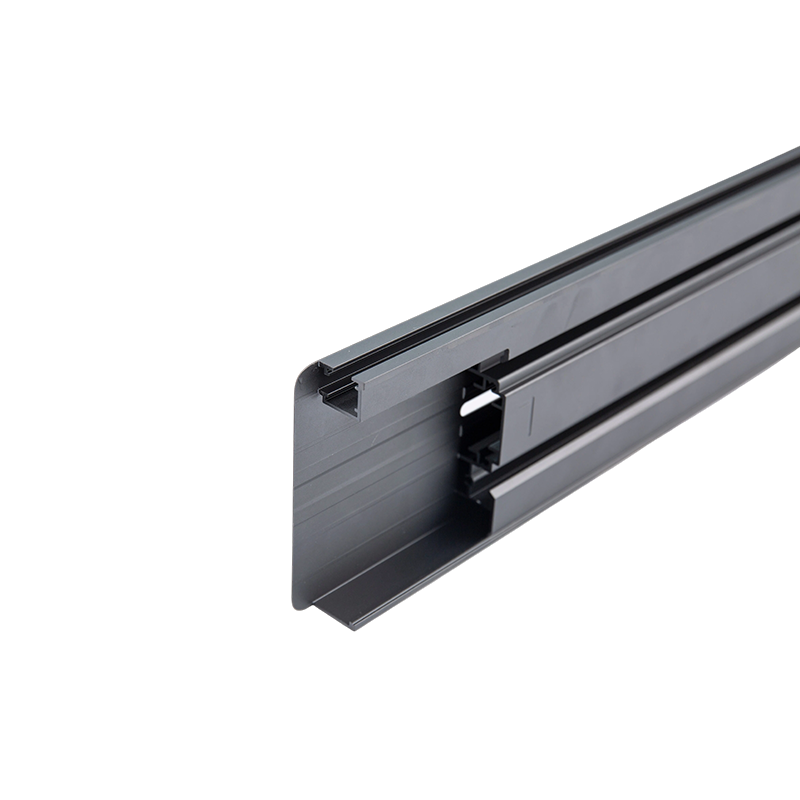
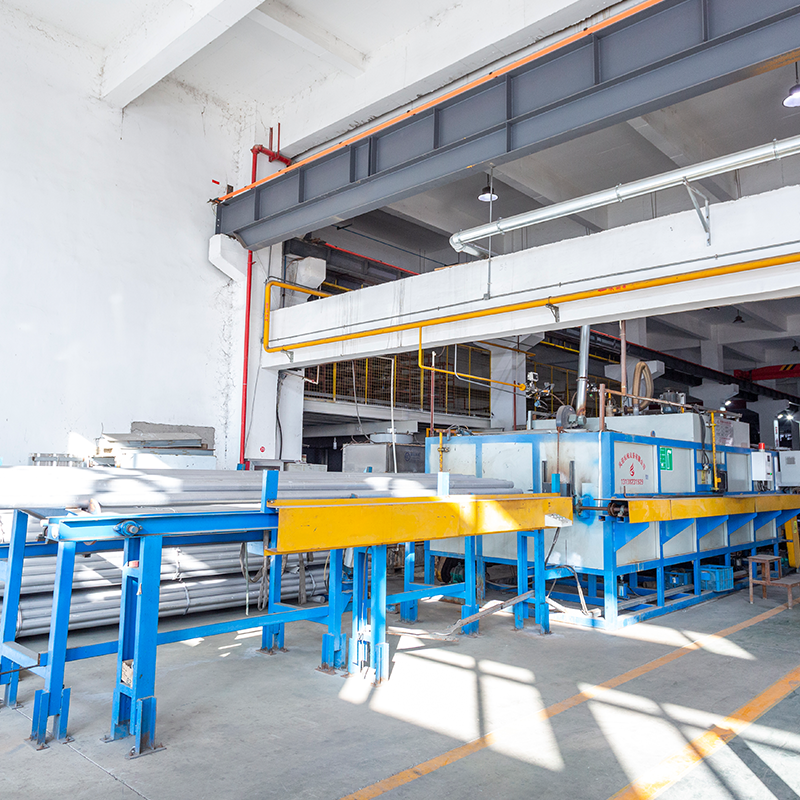 Aluminum Extrusion Profiles from Multiple Alloys and ShapesThis supplier offers 6063, 6061, and other alloys with precise extrusion for window frames and structural parts. The surrounding text explains why 6063 T5 and T6 tempers matter, so this page helps compare material options for your project.View Product →
The temper choice has a direct effect on bending resistance. At identical geometry, a 6063-T6 profile resists about 45 percent more bending moment before permanent deformation than a 6063-T5 profile. That is why T6 is specified when the window has very large glass or sits in a coastal high-wind area. T5 remains the sensible default for standard residential windows because it minimizes distortion during extrusion and costs the same per kilogram.
Before selecting the section, check how die design and alloy choice interact. Our aluminum extrusion process and alloy guide explains alloy selection and die behavior in more detail.
Wall Thickness and Dimensional Tolerance
Wall thickness is the first number most buyers check, and with good reason. External window frames in most jurisdictions require a main wall thickness of at least 1.4 mm. Drop to 1.2 mm and the frame can flex noticeably under wind load, hardware screws lose their grip, and glazing beads no longer seat consistently. Use 1.2 mm only for internal fixed lights and fully supported mullions.
Average wall thickness means nothing without tolerance control. Extrusion dies wear, and the die opening grows as tonnage passes through it. A new die may produce 1.42 mm; the same die near the end of its life can produce 1.18 mm on a critical face. Tolerances for architectural aluminum profiles are defined in EN 755-9 and GB/T 14846. A reliable supplier states the standard, measures wall thickness at defined positions, and records the results for each production batch. If the supplier cannot show batch records, the thickness claim is an opinion, not a specification.
Surface Treatment Determines Lifespan and Appearance
The second biggest source of complaints is surface quality. Untreated aluminum quickly forms a dull gray oxide, picks up dirt, and is difficult to clean. Every exterior window frame therefore gets one of four finish systems: powder coating, anodizing, PVDF coating, or wood-grain finish. The choice affects price, color stability, corrosion resistance, and cleaning frequency for the next twenty years.
| Finish System | Typical Thickness | Key Characteristics | Best Choice For |
|---|---|---|---|
| Powder coating | 60-120 μm | Wide RAL color range; good impact resistance; possible chalking under strong UV after long exposure | Residential and mid-rise buildings |
| Anodizing | 10-25 μm | Metallic look; excellent UV stability; hard but thin surface; limited color range | Coastal zones, commercial facades |
| PVDF coating | 25-35 μm | Highest weather resistance; long color retention | High-rise curtain walls, premium projects |
| Wood-grain finish | Base 60-120 μm | Timber appearance on aluminum; low maintenance | Renovation, interior partition frames |
Powder coating is the most common finish for residential aluminum windows because it covers large surfaces with a uniform, durable film in almost any RAL color. Its limitation is long-term UV behavior: bright reds and blues can lose gloss and begin to chalk after roughly eight to twelve years in direct sun. If the project is in a high-solar region and the color is saturated, specify a weathering-grade powder or move to PVDF.
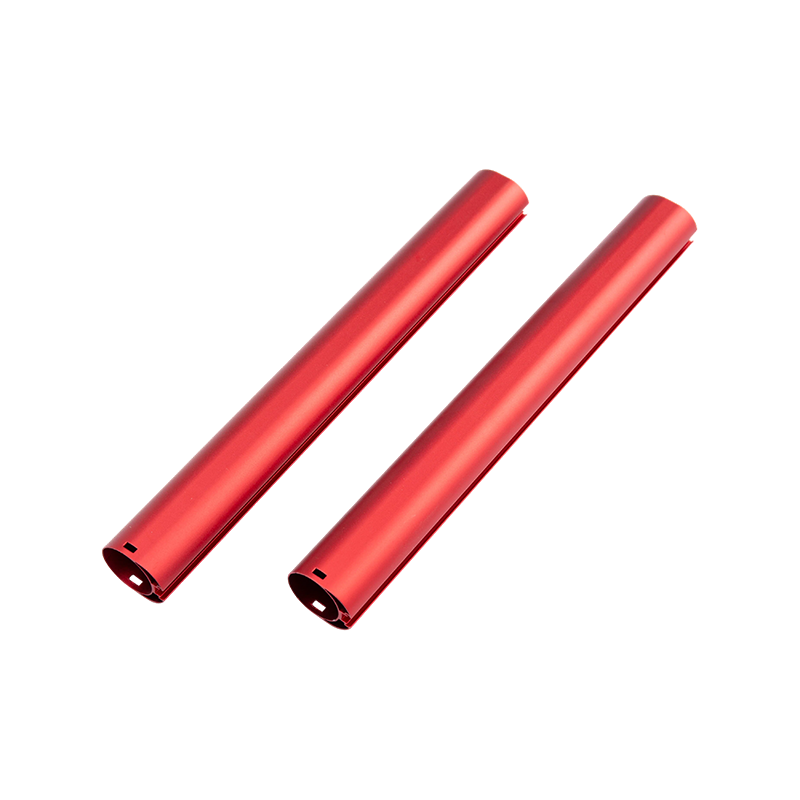
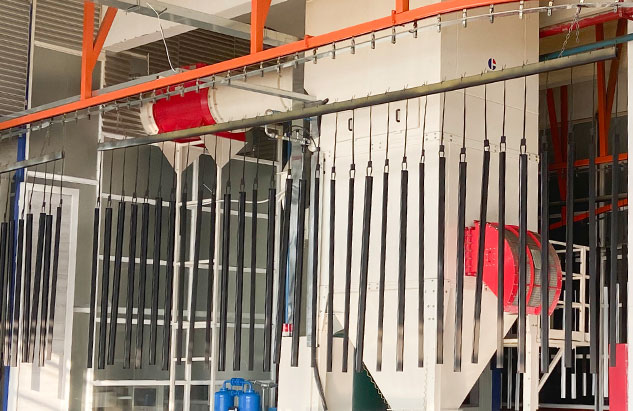 Custom Powder-Coated Aluminum Extrusion FinishesThis page details powder coating options for aluminum profiles, including RAL colors, textures, and gloss levels. It fits the discussion on finish durability and UV behavior, helping you select the right coating for residential or commercial windows.View Product →
Anodizing takes a different route. Instead of applying a paint layer, it converts the metal surface itself into a dense aluminum oxide film, so there is nothing to peel or delaminate. Architectural anodizing is specified by thickness class: AA10, AA15, or AA20 in GB/T 5237. For external window frames, AA15 is the minimum recommendation. Anodized surfaces hold their color far longer than paint under UV, but the palette is limited to metallic shades such as silver, bronze, and black. Dark anodized frames absorb more solar heat than light powder-coated frames, which can matter in hot-summer areas.
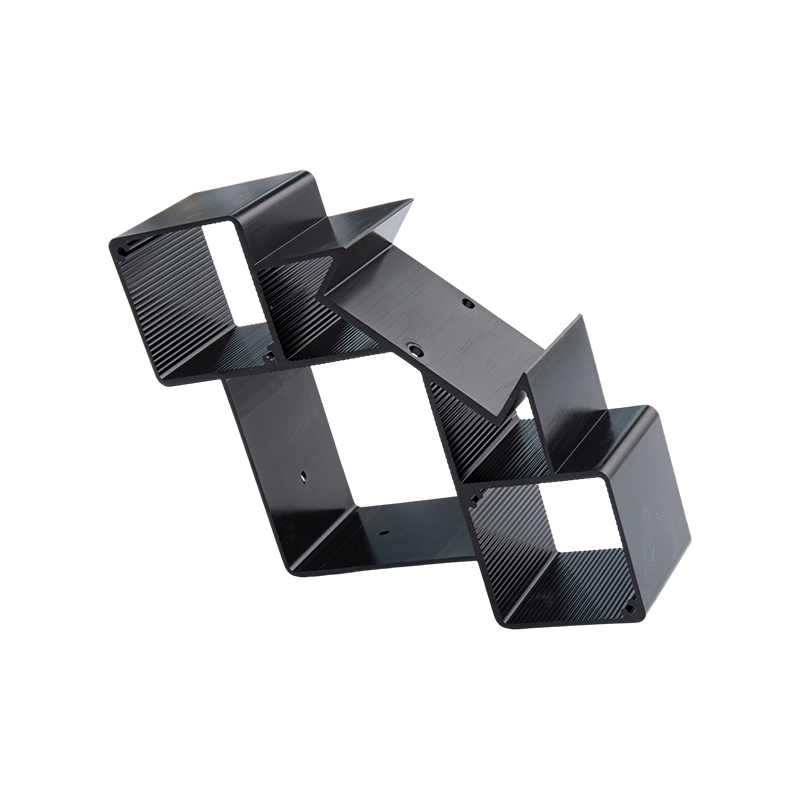
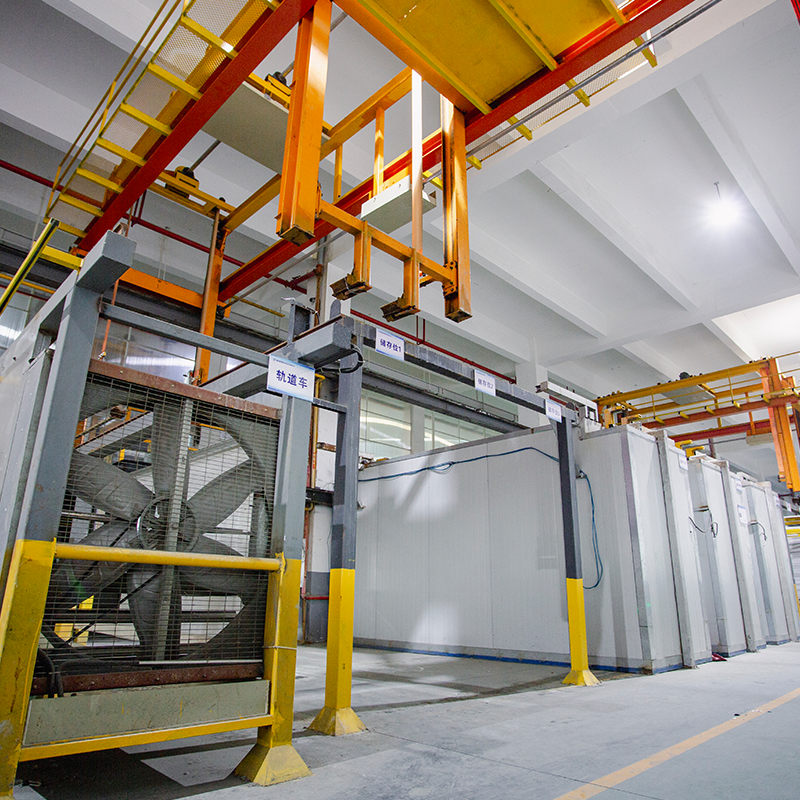 Anodized Aluminum Extrusion Profiles with Custom ThicknessThis product page covers anodized aluminum extrusions in silver, black, bronze, and champagne, with AA10 to AA25 thickness options. Since the text recommends AA15 for exterior frames, this is a good place to check anodizing specifications.View Product →
Wood-grain finish is produced by heat-transfer printing onto a powder-coated or anodized base. It gives an aluminum window the appearance of laminated timber while keeping the dimensional stability and low maintenance of metal. It is popular in renovation projects where the new window must match existing wood joinery.
Thermal Break and Frame U-Value
Aluminum conducts heat very efficiently. That is the metal's main drawback as a window frame material. Without a thermal break, the frame acts as a heat bridge, cooling the indoor edge of the glass, promoting condensation, and increasing heating demand.
A thermal break is a pair of polyamide strips inserted between an outer and inner aluminum shell to interrupt the heat path. The width of the insulation zone and the quality of the mechanical joint decide the frame's thermal performance. A typical thermally broken residential frame reaches a frame U-value of roughly 2.0 to 2.8 W/(m²·K), while a non-thermal aluminum frame sits at 5.0 W/(m²·K) or higher. In cold climates, that means frame heat loss more than doubles in winter, and condensation appears on the interior frame edge much earlier. The thermal break is not an upgrade; it is a requirement.
A Practical Checklist Before You Order
Once the alloy, temper, wall thickness, finish, and thermal break design are fixed on paper, the next risk is in manufacturing. Use this checklist when evaluating a supplier:
- Confirm the alloy and temper on the purchase order. Writing "6063-T5" instead of "6063" prevents the extruder from substituting a softer or harder temper without approval.
- Set the wall thickness and the tolerance standard in the contract, including EN 755-9 or GB/T 14846.
- Specify the finish thickness class and the inspection method, such as ISO 2360 for coating thickness.
- Ask for a first-article inspection report and batch measurement records before mass production.
- Check whether the supplier carries out extrusion, heat treatment, and surface finishing in-house.
That last point matters more than it looks. When extrusion, heat treatment, surface finishing, and optional machining are handled by one manufacturer, quality responsibility stays in a single line of control. Each step is tested against the same drawings, and defects appear before parts are shipped. You can also review how we run aluminum profile production and quality control.
Aluminum window frame material is ultimately a discipline of checking numbers: alloy and temper, wall thickness and tolerance class, finish type and thickness, thermal break geometry, and manufacturing records. Each of these has a measurable specification, and each one changes the frame's behavior in service. When the specification is documented and the supplier can prove compliance, the window will perform as designed for decades. That is what separates a well-specified frame from a repair call a few years later.
Previous Post
No previous article
Next Post
Aluminum Physical Properties and Chemical Properties: A Practical Engineering Guide

Address
No. 18, Industrial Park, Yanghua Village, Nanxun Town, Nanxun District, Huzhou City, Zhejiang Province, China
Quick Menu
Subscribe newslatter
Copyright © Huzhou Yindu Aluminum Technology Co. , Ltd. Rights Reserved.
 Custom Aluminum Extrusions Manufacturers

