


 English
 Français
 中文简体
中文简体
Aluminum Physical Properties and Chemical Properties: A Practical Engineering Guide
Content
When a design engineer specifies an aluminum profile for an elevator car, a heat sink, or a shower frame, the decision rarely rests on a single number. It rests on a combination of physical and chemical properties that, taken together, set aluminum apart from steel, copper, and plastics. The metal's density of 2.7 g/cm³ is about one-third that of steel. Its thermal conductivity reaches roughly 237 W/(m·K). And its surface builds a self-healing oxide layer that blocks corrosion before it can spread. These three facts explain why aluminum extrusions appear in elevator shafts, heat sinks, kitchenware, electrical sockets, and thousands of other engineered products.
Physical Properties of Aluminum
Physical properties describe characteristics that can be observed or measured without changing the metal's chemical identity. For engineering work, the most relevant properties of aluminum are density, melting point, thermal and electrical conductivity, reflectivity, and magnetic behavior.
Density and Strength-to-Weight Ratio
Pure aluminum has a density of 2.7 g/cm³ at 20 °C, so one cubic meter of solid metal weighs about 2,700 kg. Carbon steel, by comparison, weighs roughly 7,850 kg per cubic meter. This weight advantage drives most aluminum selection decisions. Because pure aluminum in annealed form has a tensile strength of only about 90 MPa, it is almost always alloyed with magnesium, silicon, copper, or zinc. A 6061-T6 profile reaches about 310 MPa, and some 7xxx-series alloys exceed 550 MPa. The practical result is a strength-to-weight ratio that is often two to three times better than structural steel.
Thermal and Electrical Conductivity
Aluminum conducts heat at about 237 W/(m·K) at room temperature, compared with about 401 W/(m·K) for copper. On a per-mass basis, however, aluminum is the better conductor, which is why heat sinks, radiator cores, and heater profiles are almost always made from aluminum. An aluminum heat sink needs more cross-sectional area than a copper equivalent, but it weighs less and usually costs less, as long as the package can accommodate the larger volume. Electrically, aluminum delivers about 62 percent of the conductivity of copper on the IACS scale. That makes it a practical choice for busbars, overhead transmission lines, and heavy-gauge cable where weight and cost are primary constraints.
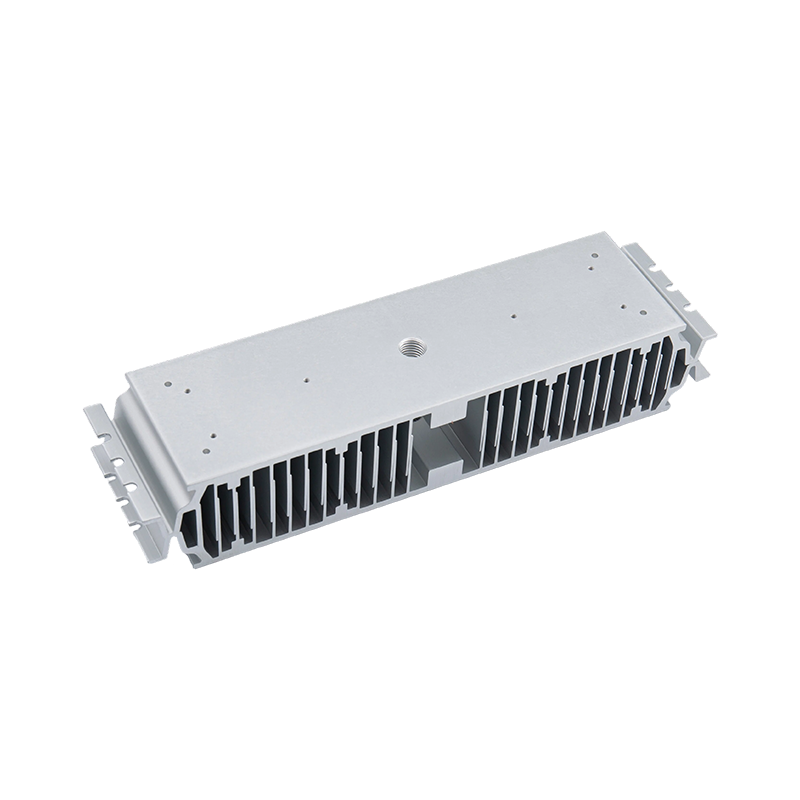
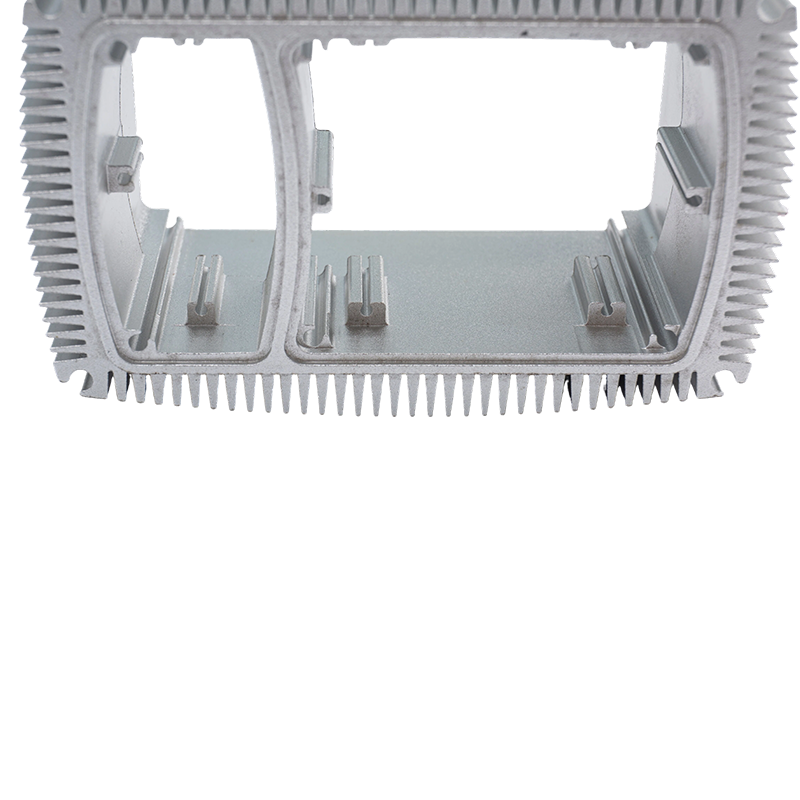 Anodized 6063/6061 Aluminum Heat Sink Extrusion ProfilesThese precision-extruded heat sink profiles offer efficient thermal management for electronics, with anodized surfaces that improve corrosion resistance and emissivity while supporting custom shapes and fin densities.View Product →
Melting Point, Crystal Structure, and Magnetic Behavior
Aluminum melts at 660 °C and boils at about 2,470 °C. Its face-centered cubic crystal structure remains stable from cryogenic temperatures up to the melting point, which is why aluminum does not become brittle at low temperatures the way carbon steel does. The same structure gives the metal high ductility, making it suitable for extrusion, rolling, and deep drawing. Aluminum is non-magnetic, a property that matters for electronic enclosures, instrument housings, and any component near sensitive magnetic fields.
Reflectivity and Thermal Expansion
Polished aluminum reflects more than 90 percent of visible light and a large share of infrared radiation. That is why it is used in lighting reflectors, solar concentrators, and insulation foil. The metal's coefficient of thermal expansion is about 23.1 µm/(m·K), roughly double that of steel. Designers must allow for this differential when aluminum profiles are assembled with steel fasteners or embedded in concrete.
| Property | Typical Value | Design Implication |
|---|---|---|
| Density | 2.7 g/cm³ | About one-third the weight of steel |
| Melting point | 660 °C | Defines upper temperature limit for structural parts |
| Thermal conductivity | 237 W/(m·K) | Supports efficient heat dissipation |
| Electrical conductivity | 37.7 MS/m (62% IACS) | Useful for conductors at reduced weight |
| Coefficient of thermal expansion | 23.1 µm/(m·K) | Needs allowance in mixed-metal assemblies |
| Crystal structure | Face-centered cubic | Provides ductility and low-temperature stability |
| Magnetic behavior | Non-magnetic | Suitable for electronic and medical environments |
Chemical Properties of Aluminum
Chemical properties describe how aluminum reacts with other substances. The most important one is its affinity for oxygen. When fresh aluminum is exposed to air, it immediately forms a continuous layer of aluminum oxide, Al2O3, only 2 to 4 nanometers thick. Unlike iron oxide, which flakes off and exposes fresh metal, aluminum oxide adheres tightly and seals the surface. This passivation layer is the reason aluminum does not rust and can survive decades of atmospheric exposure.
Amphoteric Behavior
Aluminum and its oxide are amphoteric, meaning they react with both strong acids and strong bases. The metal dissolves in hydrochloric acid to produce aluminum chloride and hydrogen gas, and it also dissolves in sodium hydroxide to form sodium aluminate and hydrogen gas. For fabricators and end users, this has practical consequences: aggressive alkaline cleaners can etch aluminum surfaces, so cleaning agents must be matched to the finishing type.
Corrosion Resistance and Service Environments
The natural oxide layer provides excellent corrosion resistance in neutral and mildly acidic conditions. Chloride ions, however, can locally break down the oxide film, causing pitting in marine or de-icing-salt environments. For coastal and industrial exposure, specifiers choose alloys with higher magnesium content, such as 5083, or add protective finishes such as anodizing and PVDF coating.
Oxidation State and the Chemistry of Anodizing
Aluminum almost always appears in the +3 oxidation state in its compounds. Aluminum oxide (Al2O3), aluminum hydroxide (Al(OH)3), and aluminum sulfate (Al2(SO4)3) are the common forms. The Al-O bond is extremely strong, with a bond energy near 512 kJ/mol, which explains why the oxide layer is both stable and protective. Anodizing uses this chemistry deliberately: an electrolytic current forces the oxide layer to grow from a few nanometers to 10-25 micrometers or more. The thicker coating improves hardness, wear resistance, and corrosion tolerance, and it can accept dyes for decorative finishes.
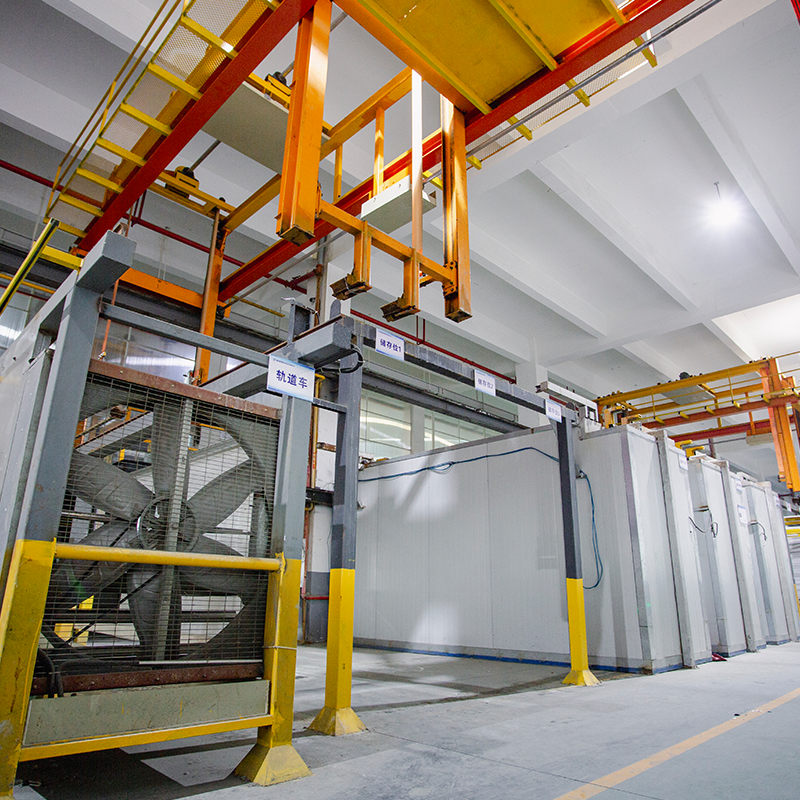 Custom Anodized Aluminum Extrusion Profiles with Color OptionsThis supplier offers anodized aluminum profiles in multiple colors and anodizing thicknesses, with CNC machining and custom length cutting services, making it suitable for varied architectural and industrial applications.View Product →
What These Properties Mean for Manufacturing
Physical and chemical properties determine the manufacturing route for aluminum components. Ductility and the stable face-centered cubic structure make extrusion practical at billet temperatures between about 350 °C and 500 °C. During extrusion, the metal is forced through a die, and its uniform flow behavior allows the production of complex hollow sections, multi-fin heat sinks, and precision profiles for elevator doors. Profile geometry, wall thickness, and alloy choice must all be matched, as described in this aluminum extrusion design guide.
Alloy selection is the first decision a designer makes. For architectural profiles, 6063 alloy offers good corrosion resistance and a smooth surface for anodizing. For higher mechanical loads, 6061 provides greater strength with a slightly less refined finish. For heat dissipation, thermal conductivity matters more than strength, and higher-purity alloys conduct better but cost more. For elevator car and shaft applications, where weight, fire safety, and corrosion resistance all matter, manufacturers use alloys and surface treatments selected for long interior service life.
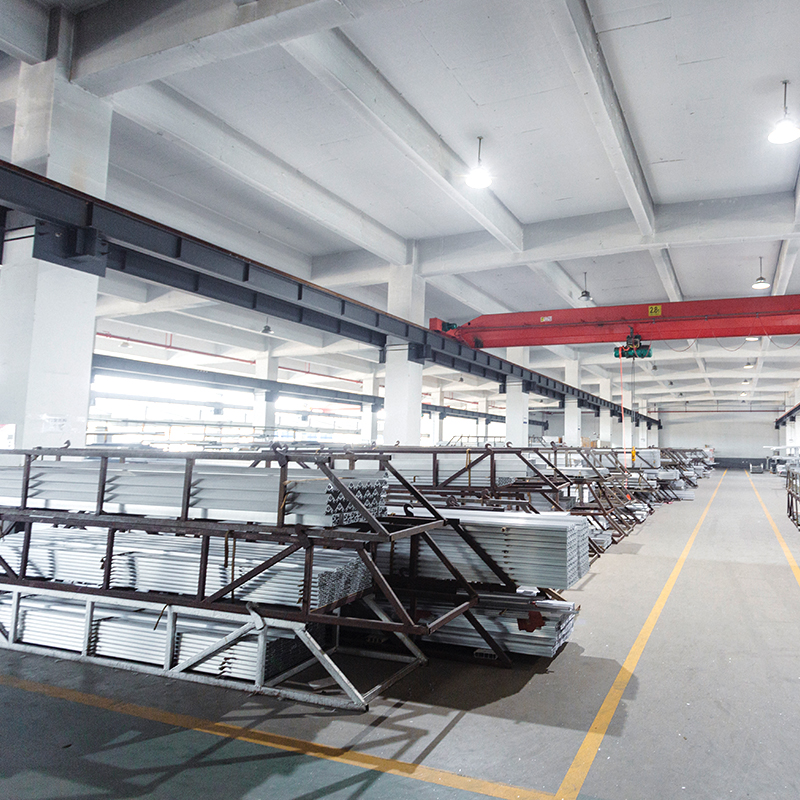 Lightweight 6000-Series Aluminum Elevator Car ProfilesEngineered for elevator framing and panels, these corrosion-resistant profiles reduce car weight and support efficient installation, with precision extrusion ensuring consistent dimensions for standard assembly.View Product →
Surface treatment is the second decision. Anodizing produces a hard, colored, or clear oxide coating. Powder coating adds a thicker polymer layer for high-traffic environments. PVDF coating provides the highest weather resistance for exterior cladding. Wood-finish aluminum profiles offer the appearance of timber with the dimensional stability of aluminum.
Practical Considerations When Sourcing Aluminum Profiles
The distance between a property table and a delivered component is filled by process control. When you buy aluminum extrusions, the final physical and chemical properties depend on alloy composition, heat treatment, and surface finishing. A mill certificate should state the alloy and temper. Dimensional tolerances should follow standards such as EN 755 or GB/T 5237. Surface finish should match the service environment.
These details are not paperwork. An elevator shaft profile in the wrong temper can creep under sustained load. A heat sink profile with excessive iron impurities can run measurably hotter. An anodized profile that is not properly sealed can lose corrosion resistance within months. Buyers who verify these variables receive components that behave as the datasheets predict.
Working with an experienced aluminum profile manufacturer is the most direct way to close the gap between theory and practice. A supplier that operates its own extrusion lines, anodizing baths, and CNC machining centers controls the entire process chain. When you review a potential supplier, ask for alloy traceability records, surface treatment parameters, and quality certifications. These factors, not the property table alone, determine whether the physical and chemical properties of aluminum survive the journey from datasheet to delivered part.
Aluminum earns its place in engineering because of the combination, not any single value. Low density and high conductivity address weight and thermal management. The self-healing oxide layer and amphoteric chemistry determine how the metal behaves in real environments. Together, these physical and chemical properties explain why extruded, anodized, and finished aluminum profiles continue to replace heavier materials in elevators, thermal management systems, appliances, and building products.
Previous Post
Aluminum Window Frame Material Guide: Alloy, Wall Thickness, Finishes, and Thermal Breaks
Next Post
Aluminum Frame for Solar Panel: Alloy, Finish, Tolerance & Sourcing Guide


Address
No. 18, Industrial Park, Yanghua Village, Nanxun Town, Nanxun District, Huzhou City, Zhejiang Province, China
Quick Menu
Subscribe newslatter
Copyright © Huzhou Yindu Aluminum Technology Co. , Ltd. Rights Reserved.
 Custom Aluminum Extrusions Manufacturers

