


 English
 Français
 中文简体
中文简体
Aluminum Frame for Solar Panel: Alloy, Finish, Tolerance & Sourcing Guide
Content
An extrusion supplier calls you with a simple question: should the aluminum frame for your solar panel use 6063-T5 or 6063-T6? That choice changes how the frame behaves during lamination, how much it deflects under wind load, and whether the corner joints stay tight after thermal cycling. The short answer is that most residential and commercial photovoltaic modules use 6063 aluminum alloy in T5 or T6 temper, with a wall thickness between 1.0 and 1.8 mm and a color anodized surface. However, the reasoning behind that selection determines whether the frame survives 25 years outdoors or begins to fail after only a few seasons.
When you source an aluminum frame for a solar panel, you are not buying four pieces of metal. You are buying a structural component that must hold the laminate in place, drain moisture, resist corrosion, and give installers a safe mounting point. Treating the frame as a commodity usually leads to problems at the worst time: when the module is already installed on a rooftop and wind starts to work the corner joints.
Why the Aluminum Frame Is More Than a Trim Piece
The aluminum frame is the outer skeleton of a solar module. It seals the edge of the glass-backsheet laminate, which prevents moisture from entering the cell area. It also adds torsional stiffness to a thin sandwich of glass, encapsulant, and backsheet, reducing the risk of microcracks during handling, transport, and snow loading.
- Seals the laminate edge against moisture, dust, and pollutant gases.
- Provides mounting channels for clamps, rails, and ground lugs.
- Adds bending resistance so large panels stay flat under wind and snow.
- Creates a buffer zone that absorbs impact during shipping and installation.
Aluminum is the dominant frame material because it is about one third the weight of steel, has better corrosion behavior than exposed iron or carbon steel, and can be extruded into complex hollow sections that combine stiffening ribs with installation grooves. Its natural oxide layer already gives a base level of protection. With the correct anodic coating, the frame can withstand coastal salt spray, acidic rain, and industrial pollution for decades.
Alloy and Temper: The Foundation of Frame Performance
Most solar panel frames are made from 6xxx series aluminum alloys. Within that group, 6063 is the most common because it offers smooth surface finish, predictable extrusion speed, and excellent response to anodizing. The temper designation matters just as much as the alloy. T5 temper is produced by cooling the extrusion after the press and then artificially aging it. T6 uses solution heat treatment plus artificial aging, which gives higher strength but requires tighter process control.
| Alloy and Temper | Typical Yield Strength | Typical Use | Key Characteristic |
|---|---|---|---|
| 6063-T5 | 90 to 130 MPa | Standard frames for residential and commercial modules | Good extrudability and smooth anodized surface |
| 6063-T6 | 180 to 205 MPa | Frames for high wind and snow load areas | Higher strength after full heat treatment |
| 6005-T5 | 180 to 200 MPa | Large-format module frames | Higher strength, but profile design and die flow need more care |
Do not rely on the temper name alone. Ask the supplier for a mill certificate showing actual yield strength, elongation, and hardness for each production lot. Batch-to-batch variation in aging practice, billet temperature, and quench rate can make two frames with the same temper behave very differently in the field.
Some buyers ask for 6061 alloy because they are familiar with its high strength, but 6061 is harder to extrude into thin multi-chamber solar frame profiles and does not anodize with the same smooth, uniform appearance. For most photovoltaic frames, 6063-T5 or T6 is the more practical choice. If you want to understand how the extrusion process affects alloy behavior, read the aluminum extrusion process and alloy selection guide before finalizing a specification.
Surface Treatment: Anodizing Is the Default
The most common finish for solar panel aluminum frames is a sulfuric acid anodic coating with a thickness of 10 to 15 microns. This creates a hard, transparent oxide layer that can be dyed dark bronze or black so the module blends into a residential roof. Anodizing is electrically insulating, resists UV damage, and does not peel like paint. It is also easier to inspect than wet paint because the coating is part of the aluminum surface itself.
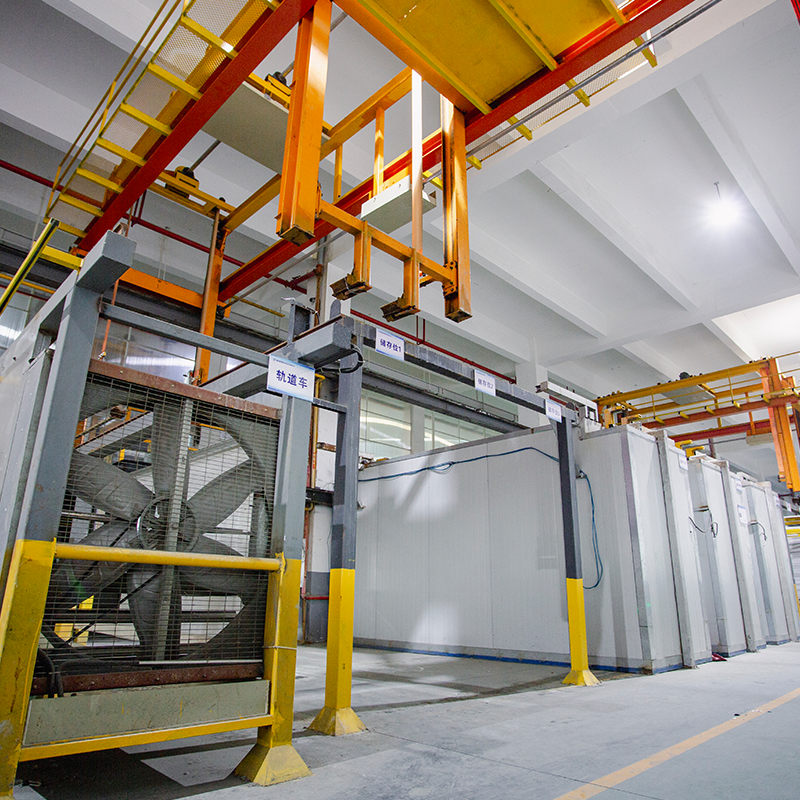 Anodized Aluminum Extrusion Profiles with Multiple Color OptionsExplore Yindu Aluminum's anodized profiles with thickness standards from AA10 to AA25 and colors including silver, black, bronze, and champagne. Suitable for solar frames needing durable, UV-resistant finishes.View Product →
For severely corrosive sites, such as coastal installations or areas with heavy road salt, some specifiers ask for a thicker anodic coating or a powder-coated finish. Powder coating applies a polymer layer 60 to 120 microns thick and provides a wider color range, but it must be carefully controlled around mounting holes and drain slots. If the powder cannot reach the inside of a narrow groove, the bare edge becomes a starting point for corrosion.
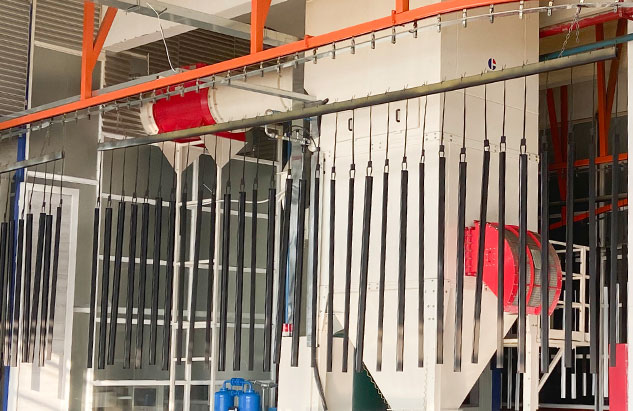 Custom Powder Coating Aluminum Extrusion ProfilesYindu Aluminum offers powder-coated profiles in RAL, PANTONE, or custom colors with smooth, sandy, or metallic textures. Ideal for corrosive environments requiring thicker, protective polymer coatings.View Product →
PVDF fluoropolymer coatings are another option for extreme color retention and chemical resistance, but they add cost and are rarely needed on a standard solar frame. Whichever finish you select, verify the actual coating thickness on the finished profile rather than trusting a process certificate alone. Use a coating thickness gauge on the outside face, inside the glass slot, and near the corner cuts. Thin spots often appear where racking clips or masking tape covered the surface during anodizing.
Dimensions, Tolerances, and Joining
A solar frame is not a simple rectangular tube. The profile contains a glass slot, a rear support rail, a drainage channel, and an external surface for clamping. Each of these zones has a tolerance that affects the quality of the final module. If the glass slot is too shallow, the laminate will not sit securely. If the outer rail is too wide, the clamp pressure will not spread evenly and the frame may crack under wind uplift.
- Glass slot depth and width: control how well the laminate seats and how much sealant remains after pressing.
- Outer rail width and flatness: determine clamp fit and torque consistency.
- Miter cut angle and hole position: must be repeatable enough to form watertight corner joints.
- Drainage holes and weeps: prevent water accumulation but must be deburred so they do not cut into the glass edge.
For a typical solar frame rail between 35 and 45 mm wide, serious fabricators hold profile length within plus or minus 0.2 mm and miter angle within plus or minus 0.1 degrees. When you compare quotes, ask which tolerances are actually measured on the production line. A very low extrusion price often hides high scrap rates at the sawing and corner drilling stage, which inflates your final module cost.
CNC sawing, milling, drilling, and tapping are standard operations for solar frame rails. These steps are normally done before anodizing or powder coating so that the finish protects the machined edges. An integrated machining cell avoids the scratches and handling damage that occur when long profiles are moved between separate subcontractors.
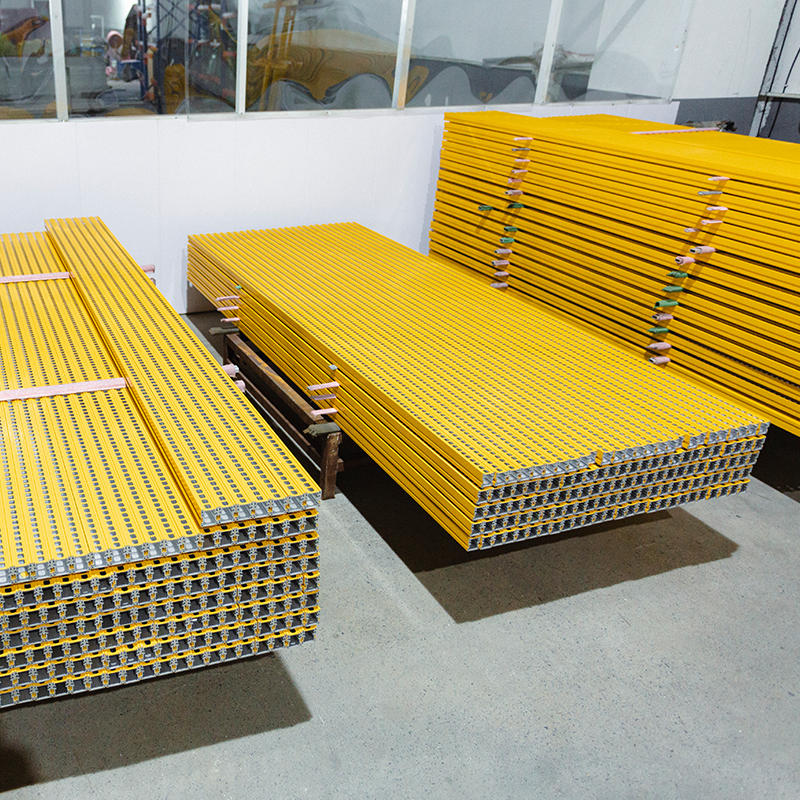 CNC Machining Services for Aluminum ExtrusionsYindu Aluminum provides precision CNC cutting and machining for aluminum profiles, with additional surface treatments like anodizing and powder coating. Essential for fabricating solar frame rails with accurate joints.View Product →
Corner joints in solar frames are usually assembled with stainless steel corner keys inserted into hollow chambers and then compressed by crimping or screws. The joint area also needs a butyl or silicone sealant that stays flexible from minus 40 degrees Celsius to plus 85 degrees Celsius. Ask the frame supplier for a corner pull test report showing the force required to separate a finished corner, not just a dimensional drawing. That test tells you whether the machining, key fit, and sealant application work together as a system.
Evaluating a Frame Manufacturer
Many buyers make the mistake of selecting a solar panel aluminum frame supplier based on one sample and a low quote. That approach ignores hidden risks in alloy traceability, coating consistency, and machining accuracy. A reliable supplier should be able to document four things before you issue a purchase order.
- Alloy source and traceability: a mill certificate for every extrusion lot and a batch number printed or stamped on the profile.
- Coating process control: anodizing bath records, current density, sealing quality, and coating weight per square meter.
- Machining quality: a sampling plan with dimensional reports showing length, angle, hole position, and deburring condition.
- Assembly compatibility: a corner specimen and a test module that verify fit with the laminate, sealant, and mounting clamps.
An integrated supplier that handles extrusion, surface treatment, and CNC machining simplifies this process because one factory controls the entire tolerance chain. If a dimensional problem appears, there is no room for two subcontractors to point at each other. The same factory can also respond faster when you need a design change or a tighter tolerance on a new profile.
When comparing manufacturers, ask to inspect their actual extrusion product range. You want to see whether their standard tooling already covers similar frame shapes and whether their finishing lines can achieve the required color and coating thickness consistently. A supplier with broad experience across different aluminum applications is more likely to understand how a small change in groove width or corner geometry affects final mechanical performance.
An aluminum frame for a solar panel is not a commodity. The alloy, temper, anodic coating, and machining tolerances all contribute to the module's structural integrity and service life. Define your performance requirements clearly, verify coating thickness and dimensional reports, and always test a real corner joint before committing to a large order. Suppliers with in-house extrusion, finishing, and CNC machining are better positioned to deliver consistent frames, solve quality issues quickly, and support the long-term reliability your customers expect.
Previous Post
Aluminum Physical Properties and Chemical Properties: A Practical Engineering Guide
Next Post
Aluminium Structure for Solar Mounting: A Practical Material Guide and Selection Tips

Address
No. 18, Industrial Park, Yanghua Village, Nanxun Town, Nanxun District, Huzhou City, Zhejiang Province, China
Quick Menu
Subscribe newslatter
Copyright © Huzhou Yindu Aluminum Technology Co. , Ltd. Rights Reserved.
 Custom Aluminum Extrusions Manufacturers

