


 English
 Français
 中文简体

CNC Machining Tolerances for Aluminum Parts: Standard Ranges, Cost and Design Tips
Content
- 1 The Right Tolerance Is the Loosest One That Still Functions
- 2 Standard CNC Machining Tolerances and What They Really Mean
- 3 Where Extrusion Tolerance Ends and Machining Tolerance Begins
- 4 How Tolerance Choices Move Cost and Lead Time
- 5 Tolerances That Are Genuinely Hard to Hold on Aluminum
- 6 A Short Checklist Before the Drawing Leaves Your Desk
A batch of anodized aluminum housings clears incoming dimensional inspection, then jams on the assembly line because one mounting face is 0.12 mm out of flat. Nothing on the drawing was violated. The tolerance zone simply did not match the way the part is actually used, and the print was legal while the parts were still scrap.
CNC machining tolerances are the permitted variation around a nominal dimension, and every number written on a drawing decides how a part is fixtured, how many passes it takes, how it is inspected, and what it costs. Getting them right is less about memorising tables than about knowing which surfaces do real work.
The Right Tolerance Is the Loosest One That Still Functions
Start with function, then work backwards to the number. A bore that carries a press-fit bearing deserves a tight call. A clearance hole for an M6 screw does not, however impressive ±0.01 mm looks on a drawing.
Two habits separate experienced buyers from beginners:
- Tolerance the feature, not the whole part. Apply tight limits only to locating bores, sealing faces, bearing seats and mating pilots, and relax everything else.
- Ask how it will be measured. If a ±0.01 mm call can only be verified on a CMM or air gauge, that inspection step belongs in the quote and the lead time, not in a surprise email three weeks later.
A tolerance is a manufacturing instruction, not a statement of quality. Over-specifying it does not make a part better; it makes the good features more expensive to prove.
Standard CNC Machining Tolerances and What They Really Mean
Across most job shops, ±0.1 mm (roughly ±0.004 in) on milled and turned features is a comfortable default, and ±0.005 in (0.127 mm) remains the widely quoted benchmark for standard CNC work. Precision territory starts around ±0.025 mm (±0.001 in); beyond that you are into grinding, jig boring or lapping, with the price curve to match.
For drawings without individual callouts, ISO 2768-1 supplies a general tolerance class. Class m is the usual shop default, and class f is worth specifying only if every dimension genuinely needs it.
| Nominal length | f (fine) | m (medium) | c (coarse) |
|---|---|---|---|
| 0.5–3 mm | ±0.05 | ±0.1 | ±0.2 |
| 3–6 mm | ±0.05 | ±0.1 | ±0.3 |
| 6–30 mm | ±0.1 | ±0.2 | ±0.5 |
| 30–120 mm | ±0.15 | ±0.3 | ±0.8 |
| 120–400 mm | ±0.2 | ±0.5 | ±1.2 |
One practical detail: halving a tolerance band rarely halves anything. It usually adds a finishing pass, a second setup, or a probing cycle, and those costs land on the whole part rather than the single feature you were worried about.
Where Extrusion Tolerance Ends and Machining Tolerance Begins
For aluminum parts that begin as an extruded profile, two tolerance systems meet on the same drawing, and confusing them causes a lot of avoidable argument. The die delivers what the press can hold: typically ±0.1 to ±0.3 mm on wall thickness, around ±0.5 mm on cross-section features, with straightness in the region of 1 mm per metre and roughly a degree of twist per metre. Those numbers come from tooling, alloy and quench rate, not from operator skill.
Machining then refines the few faces that actually matter, which is why a ±0.05 mm slot on an extruded profile should be quoted as a post-extrusion machining operation rather than negotiated with the die shop. Trying to squeeze it out of the die raises tooling cost and rejection rates at the same time.
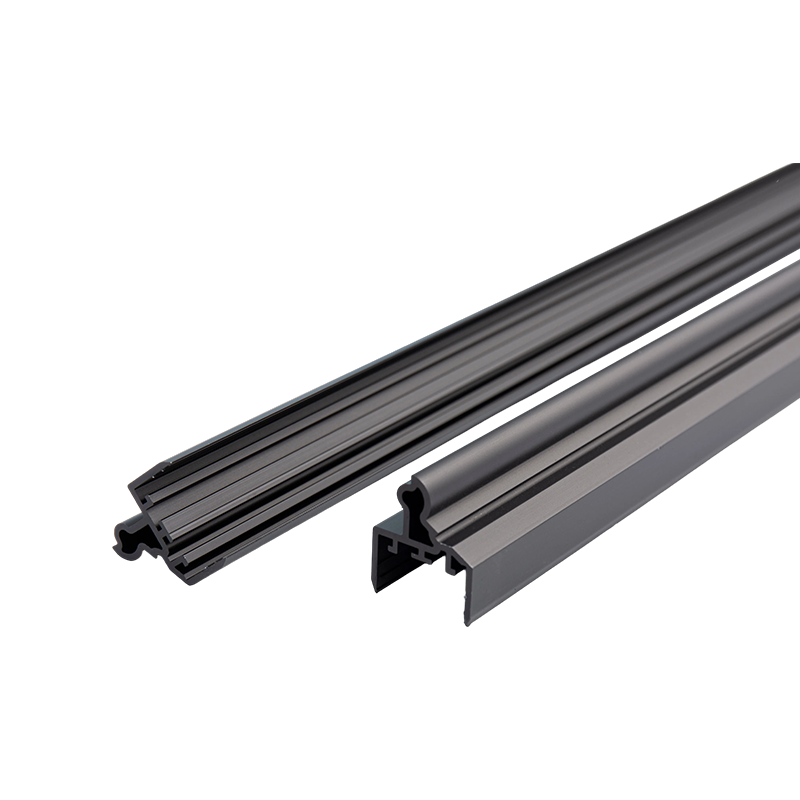
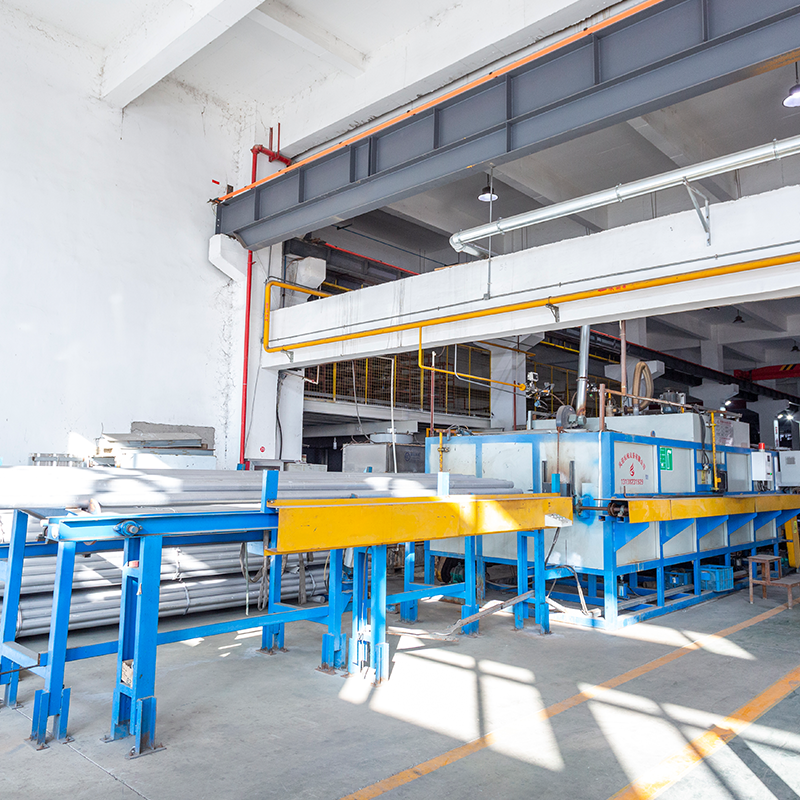 Aluminum Extrusion Profiles and Custom Machining ServicesBrowse standard and custom aluminum extrusion profiles with alloy options, finishes, and fabrication services for frames, automotive parts, and industrial equipment.View Product →
When extrusion and machining sit inside one plant, the profile can be cut long, stress-relieved, then machined from a single datum. Fewer datum transfers means fewer stacked errors, and a general tolerance of ±0.1 mm on a machined extrusion face is often achievable without extra setups.
How Tolerance Choices Move Cost and Lead Time
Machining cost tracks the number of setups and inspections more closely than the number printed on the drawing. A feature held to ±0.05 mm on a three-axis mill may need a spring pass and a probing cycle; the same feature at ±0.2 mm comes off in one pass with a caliper check.
From quoting experience with aluminum work, halving a tolerance band adds roughly 20–50% to the cost of that feature, and the penalty climbs steeply once you pass what the process holds comfortably: about ±0.025 mm for milling, ±0.05 mm for turning, and ±0.1 mm for drilled holes before reaming. Lead time moves for a different reason, since tight calls queue for CMM time and first-article reports rather than for spindle time. A useful reference on where the money actually goes is our breakdown of the CNC aluminum extrusion process and machining cost.
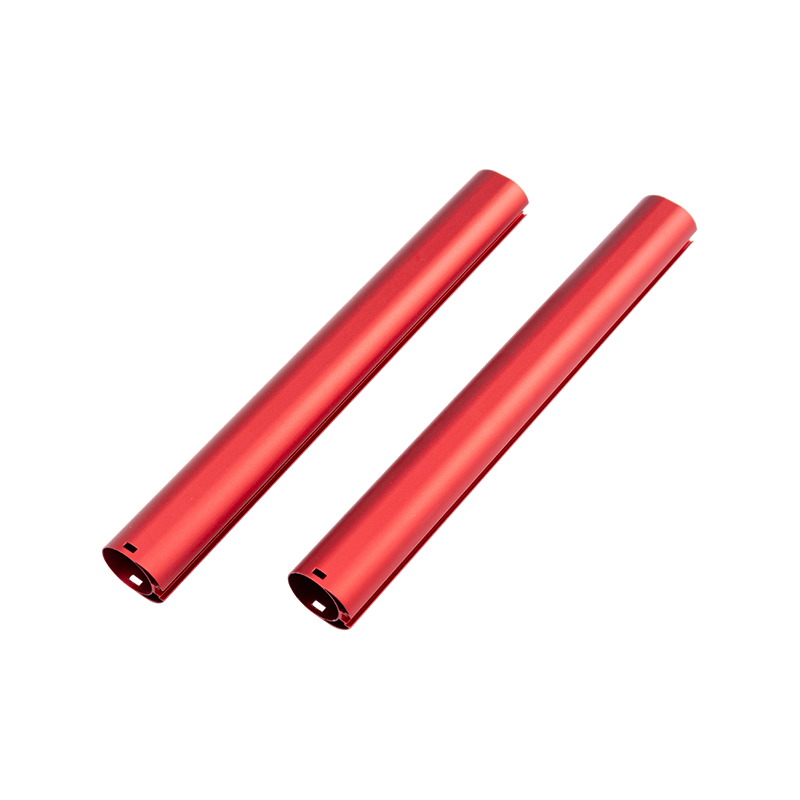
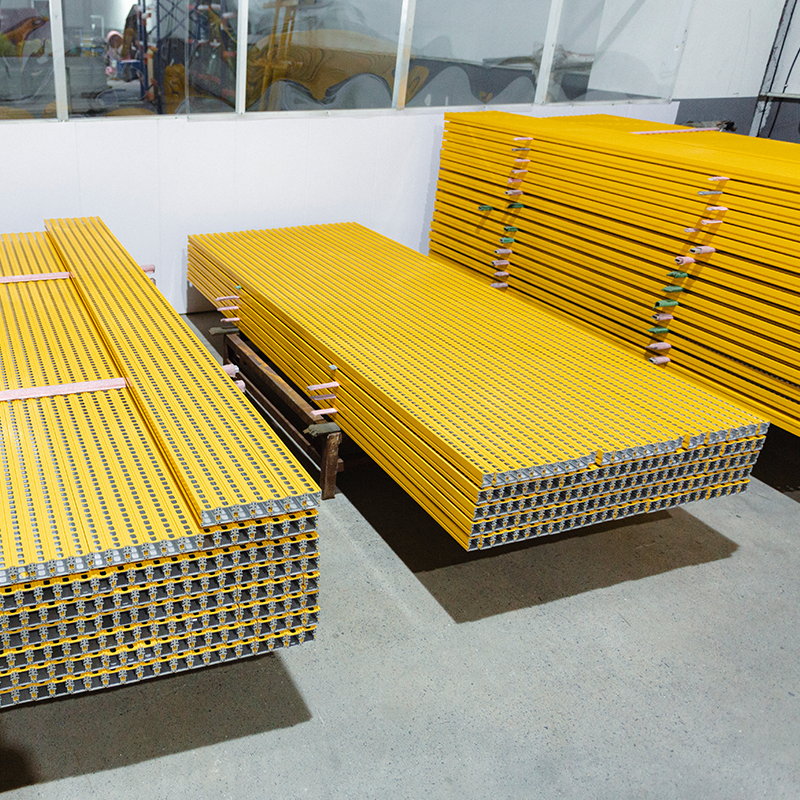 CNC Machining Services for Aluminum Extrusion ProfilesExplore CNC cutting, milling, turning, and plasma cutting for aluminum components, with optional anodizing, painting, and assembly for automotive, electronics, and furniture parts.View Product →
There is also a hidden cost line: scrap risk. A process running at half its capability produces a wide scatter, and even parts inside the limit may behave differently in assembly. Capability of 1.33 Cpk or better is worth more than a tighter number nobody can repeat.
Tolerances That Are Genuinely Hard to Hold on Aluminum
Some calls are difficult for reasons that have nothing to do with the operator. Knowing them up front saves a round of rework.
- Thin walls. Below about 1 mm, cutting forces deflect the wall more than the tool moves, and the spring pass becomes guesswork. Ribs and a light finishing cut help; a ±0.02 mm call on a 0.8 mm fin usually does not.
- Anodizing build-up. A Type II film grows roughly half outward and half inward, so a 15 µm coating shifts an external surface by about 7 µm per side. Hard anodizing at 50 µm can move a bore by 0.02–0.03 mm, which means masking, a pre-machining allowance, or a note on the drawing about finishing after coating.
- Thermal movement. Aluminum expands around 23 µm per metre per kelvin. A 200 mm part measured at 30 °C is about 0.046 mm longer than at 20 °C, which matters as soon as tolerances drop below 0.05 mm.
- Clamping distortion. Fixture pressure alone can close a slot by 0.03 mm on a slender profile, and it springs back after unclamping.
- Alloy behaviour. 6061 machines cleanly with good chip control, while softer 6063 tends to smear and build up on the edge, making tight surface and dimensional calls more setup-sensitive.
Coating choices belong in the same conversation as tolerances. Our anodized aluminum extrusion profiles page covers how film thickness and sealing are specified alongside dimensional limits.
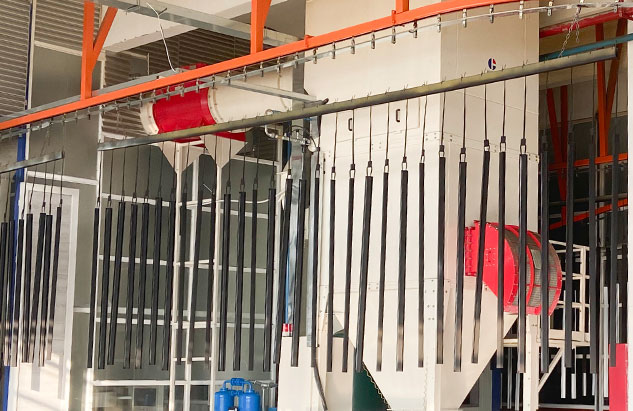 Hard Anodizing Service for Aluminum Alloy ComponentsReview low-temperature hard anodizing that builds a 25–100 µm wear-resistant oxide film, suited to piston pins, guide rails, tool holders, and other precision parts.View Product →
Where wear resistance and dimensional accuracy both matter, hard anodizing is usually the better route, provided the drawing states the finish size after coating rather than before it.
A Short Checklist Before the Drawing Leaves Your Desk
- Highlight functional surfaces and give only those a tight limit; leave general dimensions to the title-block class.
- Use GD&T for location, flatness and position where a stack of plus/minus limits would force an unnecessarily tight box.
- State the general tolerance standard and class explicitly, for example ISO 2768-m, so the shop is not guessing.
- Note edge breaks, burr limits and surface roughness; a 0.8 µm Ra call is a separate operation, not a freebie.
- Say whether the tolerance applies before or after coating, and leave a machining allowance where it does not.
- Ask for the inspection plan and the gauge used, so the acceptance criteria match the capability of the process.
None of these points require special software. They require the buyer and the designer to agree on what the part must do before anyone cuts metal.
Tolerances are a contract between design intent and manufacturing reality, and the cheapest drawing is the one where both sides read it the same way. Huzhou Yindu Aluminum Technology has been extruding and machining aluminum since 1985, with in-house anodizing, hard anodizing, coating and CNC finishing across a 42,000 m² plant producing around 10,000 tonnes a year. If you have a profile drawing with a few stubborn callouts, send it over with the functional surfaces marked, and the tolerance discussion gets a lot shorter.
Previous Post
No previous article
Next Post
CNC Machining Explained: Processes, Tolerances and Aluminum Parts Guide

Address
No. 18, Industrial Park, Yanghua Village, Nanxun Town, Nanxun District, Huzhou City, Zhejiang Province, China
Quick Menu
Subscribe newslatter
Copyright © Huzhou Yindu Aluminum Technology Co. , Ltd. Rights Reserved.
 Custom Aluminum Extrusions Manufacturers

