


 English
 Français
 中文简体
中文简体
CNC Machining for Aluminum Extrusion: Precision & Process Guide
Content
Core Advantages of CNC Machining Aluminum Extrusions
CNC machining is the definitive secondary process for transforming standard aluminum extrusions into high-precision functional components, offering dimensional tolerances as tight as ±0.005 inches (±0.127mm) that extrusion alone cannot achieve. While extrusion provides an efficient near-net shape, CNC operations such as milling, drilling, and tapping are essential for adding complex features, ensuring assembly fitment, and meeting critical engineering specifications.
The combination leverages the low material waste of extrusion with the geometric freedom of subtractive manufacturing. For high-volume production runs exceeding 1,000 units, this hybrid approach typically reduces total part cost by 30% to 50% compared to machining solid billet, primarily due to reduced cycle times and lower raw material expenses.
Optimal Aluminum Alloys for Extrusion Machining
Selecting the correct alloy is critical because machinability varies significantly between extrusion grades. The wrong choice can lead to poor surface finishes, excessive tool wear, or burr formation that requires costly secondary deburring.
| Alloy | Machinability Rating | Primary Characteristics | Best Application |
|---|---|---|---|
| 6061-T6 | Good | Versatile, weldable, corrosion resistant | General structural frames, brackets |
| 6063-T5/T6 | Fair to Good | Superior surface finish, softer | Architectural trim, heat sinks |
| 2011-T3 | Excellent | Free-machining, produces small chips | High-speed screw machine parts |
| 7075-T6 | Good | Ultra-high strength, aerospace grade | Heavy-load structural components |
Why 6061-T6 Remains the Industry Standard
Despite specialized alternatives, 6061-T6 accounts for over 70% of machined extrusion projects due to its balanced properties. It offers sufficient strength for most industrial applications while maintaining predictable chip formation and excellent response to anodizing. For shops prioritizing pure machining speed over strength, 2011 allows feed rates up to 20% higher than 6061, but it lacks weldability and has lower corrosion resistance.
Critical Fixturing Strategies for Thin-Walled Profiles
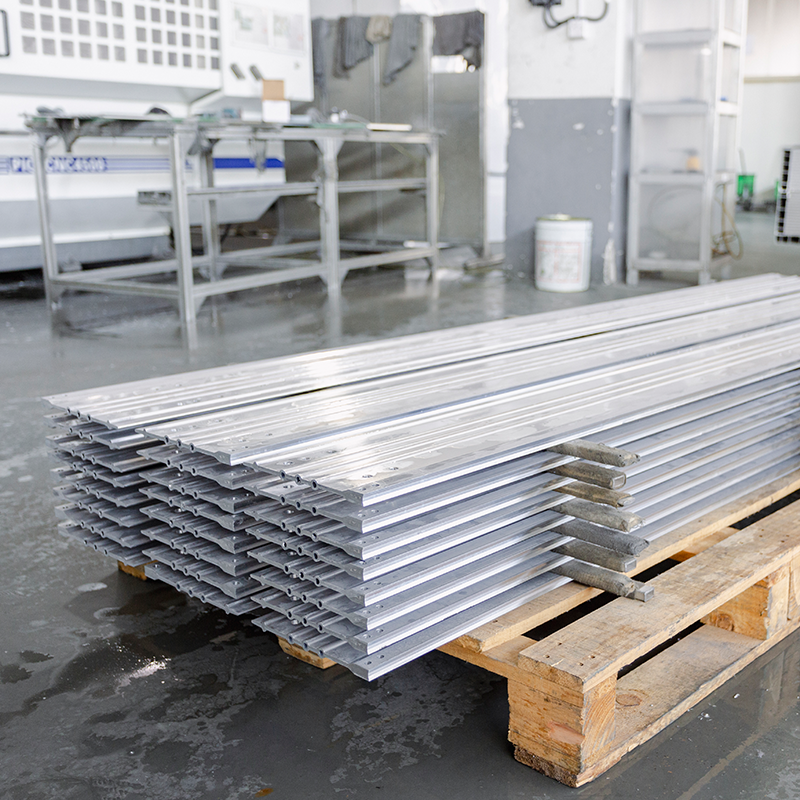
Aluminum extrusions are inherently prone to deflection and vibration during CNC machining due to their thin walls and open profiles. Improper clamping is the leading cause of dimensional inaccuracy and chatter marks. Successful machining requires dedicated fixture design rather than generic vises.
- Nested Fixtures: Custom-machined soft jaws or sub-plates that match the extrusion's external profile prevent crushing and distribute clamping force evenly across the entire length.
- Internal Mandrels: For hollow profiles, inserting a supportive mandrel or expanding internal clamp prevents wall collapse when applying lateral cutting forces.
- Vacuum Chucks: Ideal for flat-faced extrusions where mechanical clamps would obstruct tool paths; effective for holding large surface areas without distortion.
- End Supports: Always support both ends of long extrusions to eliminate harmonic vibration; unsupported spans exceeding 12 inches significantly increase chatter risk.
Design Guidelines to Reduce Machining Costs
Cost efficiency in CNC machining for aluminum extrusion is determined during the design phase. Small modifications to the CAD model can dramatically reduce cycle time and eliminate unnecessary setups.
Standardize Hole Sizes and Depths
Each unique hole diameter requires a separate tool change and setup verification. Limiting designs to 3-4 standard drill sizes per part can reduce machining time by 15%. Additionally, avoid deep holes with aspect ratios exceeding 10:1; these require specialized peck drilling cycles and gun drills, increasing cost exponentially.
Align Features with Extrusion Direction
Whenever possible, orient machined features parallel or perpendicular to the extrusion axis. This allows multiple parts to be fixtured in a single linear array and machined in one continuous program run. Angled features requiring rotary axes or custom angle plates add $50-$150 per setup in fixturing and programming overhead.
Specify Realistic Tolerances
Only apply tight tolerances to functional mating surfaces. A standard extrusion tolerance is ±0.010 inches; specifying ±0.001 inches on non-critical features forces slower feeds, additional inspection, and potentially EDM or grinding operations. Reserve precision tolerances exclusively for bearing seats, pin holes, and sealing surfaces.
Surface Finish and Post-Processing Considerations
The final surface quality of machined aluminum extrusions depends on both cutting parameters and subsequent finishing treatments. Understanding this relationship prevents costly rework and ensures aesthetic consistency.
- Cutting Parameters: Use sharp carbide end mills with high rake angles and polished flutes specifically designed for aluminum. Running at 12,000+ RPM with appropriate chip load produces a mirror-like as-machined finish (Ra 32 µin or better).
- Anodizing Prep: If Type II or Type III anodizing is required, avoid aggressive blasting before machining. Machined surfaces should be left clean; anodizing will replicate tool marks, so achieve the desired finish during cutting, not after.
- Burr Management: Specify edge treatment requirements clearly. Tumble deburring works for simple geometries but can round critical edges; hand deburring preserves sharp corners but adds labor cost. Thermal deburring is ideal for complex internal passages inaccessible to manual tools.
- Powder Coating: Mask all precision-machined bores and faces before coating. Powder coat thickness typically adds 0.002-0.004 inches per side, which must be accounted for in pre-coat machining dimensions to maintain final assembly fit.
Previous Post
Can You Powder Coat Aluminum Extrusion? Process & Prep Guide
Next Post
PVDF Coating Aluminum Extrusion Profiles: Durability & Benefits

Address
No. 18, Industrial Park, Yanghua Village, Nanxun Town, Nanxun District, Huzhou City, Zhejiang Province, China
Quick Menu
Subscribe newslatter
Copyright © Huzhou Yindu Aluminum Technology Co. , Ltd. Rights Reserved.
 Custom Aluminum Extrusions Manufacturers

