


 English
 Français
 中文简体
中文简体
Thermal Conductivity of Aluminum: Alloy Data, Temper Effects, and Why It Matters
Content
- 1 A Practical Starting Point: The Thermal Conductivity of Aluminum
- 2 What Thermal Conductivity Measures and Why Units Matter
- 3 Thermal Conductivity of Aluminum Alloys: Typical Values
- 4 Factors That Lower the Thermal Conductivity of Aluminum
- 5 Applying Thermal Conductivity Data in Heat Sink and Heater Profiles
- 6 What to Do With This Data
A Practical Starting Point: The Thermal Conductivity of Aluminum
If you are specifying an aluminum heat sink for a power converter, an LED driver, or a heater assembly, one number usually comes up first: the thermal conductivity of aluminum. Pure aluminum sits near 237 W/m·K, but the extruded alloy in your drawing will almost certainly be lower. That difference is not a laboratory detail; it changes fin thickness, base plate area, and the cost of the assembly.
For most extruded heat-dissipation parts, 6063-T5 and 6061-T6 are the default options. 6063-T5 offers around 209 W/m·K, while 6061-T6 is closer to 167 W/m·K. That 42 W/m·K gap determines how many fins you need and how quickly the part moves heat away from the source.
Copper conducts heat much better, but aluminum remains the practical choice for many heat sinks, heater profiles, and structural parts because it weighs about one-third as much as copper and costs less per part. When you compare thermal performance per kilogram, aluminum is difficult to beat.
What Thermal Conductivity Measures and Why Units Matter
Thermal conductivity (k) quantifies how fast heat flows through a material under a temperature gradient. Expressed in watts per meter-kelvin (W/m·K), it tells you how many watts pass through a 1 m cube when one face is 1 K hotter than the opposite face. A higher k means lower internal resistance to heat flow.
How It Is Measured
For bulk aluminum products, manufacturers use methods such as the laser flash technique for small samples and guarded hot plate or heat flow meter methods for larger sections. Measurement temperature matters because aluminum's conductivity declines as temperature rises above room temperature. A data sheet that reports only one number may not reflect your actual operating range.
What Aluminum's Conductivity Range Means in Practice
A value like 167 W/m·K sounds abstract until you compare a 100 mm long extrusion with a 1000 mm² cross-section. At a 20 K temperature difference, that piece conducts roughly 33 W if made from 6061-T6 and about 42 W if made from 6063-T5. In a real heat sink, that difference translates into shorter fins, lower airflow resistance, or a smaller overall envelope.
Thermal Conductivity of Aluminum Alloys: Typical Values
Pure aluminum has the highest conductivity in the aluminum family, but pure metal is too soft for most structural and heat-dissipation profiles. Alloying elements such as silicon, magnesium, copper, and zinc scatter electrons and reduce conductivity. Heat treatment then rearranges those elements into particles, which is why the same alloy can show different k in different tempers.
| Grade and Temper | Thermal Conductivity (W/m·K) | Typical Use |
|---|---|---|
| Pure aluminum (99.9%) | 237 | Reference material, foil, specialized electrical parts |
| 1100-O | 222 | Chemical equipment, reflectors |
| 3003-H14 | 193 | General sheet metal, fin stock |
| 5052-H32 | 138 | Marine components, fuel tanks |
| 6061-T6 | 167 | Structural profiles, frames, custom extrusions |
| 6063-T5 | 209 | Heat sinks, architectural profiles, heater components |
| 2024-T4 | 121 | Aerospace parts, high-strength applications |
Why 6063-T5 and 6061-T6 Dominate Extruded Heat Sinks
6063 is often called the extrusion alloy because it combines good surface quality, moderate strength, and a high-conductivity T5 temper. 6061 is stronger and easier to machine, but its conductivity is lower. When the design needs fins plus a mounting plate, 6063-T5 usually delivers better thermal performance at the same weight. 6061-T6 makes sense when the part also carries mechanical loads. A custom aluminum extrusion profile can be shaped to use each alloy's strengths while keeping thermal resistance low.
Surface treatment changes the picture slightly. Anodized coatings improve wear and corrosion resistance, but the oxide layer itself has low conductivity. In thin anodized layers, the added thermal resistance is small; however, thick hard anodizing can reduce heat flow. For parts that need both protection and conduction, anodized aluminum extrusion profiles remain a common choice, provided the coating thickness is controlled to suit the thermal design.
Factors That Lower the Thermal Conductivity of Aluminum
Alloy Composition
Every alloying element behaves differently. Magnesium and silicon in 6xxx alloys lower conductivity moderately. Copper, as in 2xxx alloys, causes a larger drop. Zinc in 7xxx alloys falls in between. Selecting a grade is therefore a tradeoff between conductivity, strength, and response to surface finishing.
Temper and Heat Treatment
In 6xxx alloys, a T5 temper tends to preserve more of the extrusion's as-formed conductivity while still providing enough strength for many heat-dissipation applications. A T6 temper can be stronger but often comes with a lower k. If your main requirement is moving heat, ask whether T5 is acceptable for the structural loads in your part.
Temperature and Impurities
As temperature increases, lattice vibrations scatter electrons more strongly, so k drops. Iron and silicon impurities in wrought alloys form intermetallic particles that also lower conductivity. Low-iron variants of 1xxx and 6xxx alloys are available when maximum conduction is needed, although they may cost more.
Applying Thermal Conductivity Data in Heat Sink and Heater Profiles
The best aluminum alloy for a heat sink is not simply the one with the highest k. You also need profile geometry, airflow, surface area, and assembly method. Extruded profiles place material exactly where heat spreads and where fins shed it. The starting point is understanding how alloy choice and die design interact; our aluminum extrusion alloys and design guide covers that in more detail.
Heat Sink Extrusions
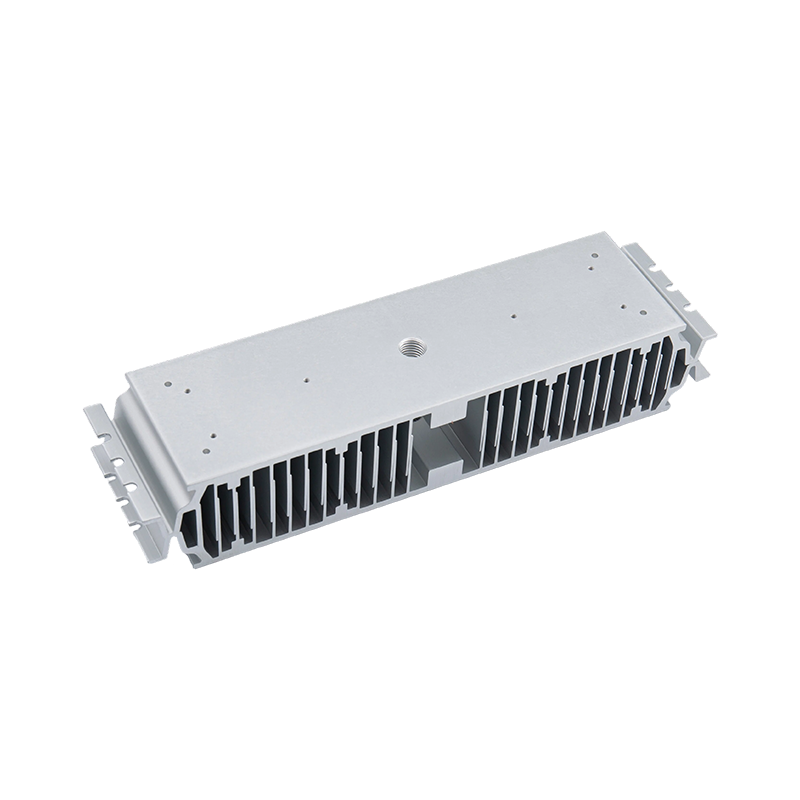
For power electronics, LED drivers, and motor controllers, an extruded heat sink with controlled fin spacing is often enough. A high-conductivity alloy improves temperature uniformity so that hot spots do not form directly under the component mounting area. For production parts, our high thermal conductivity anodized aluminum heat sink profiles are made with this requirement in mind.
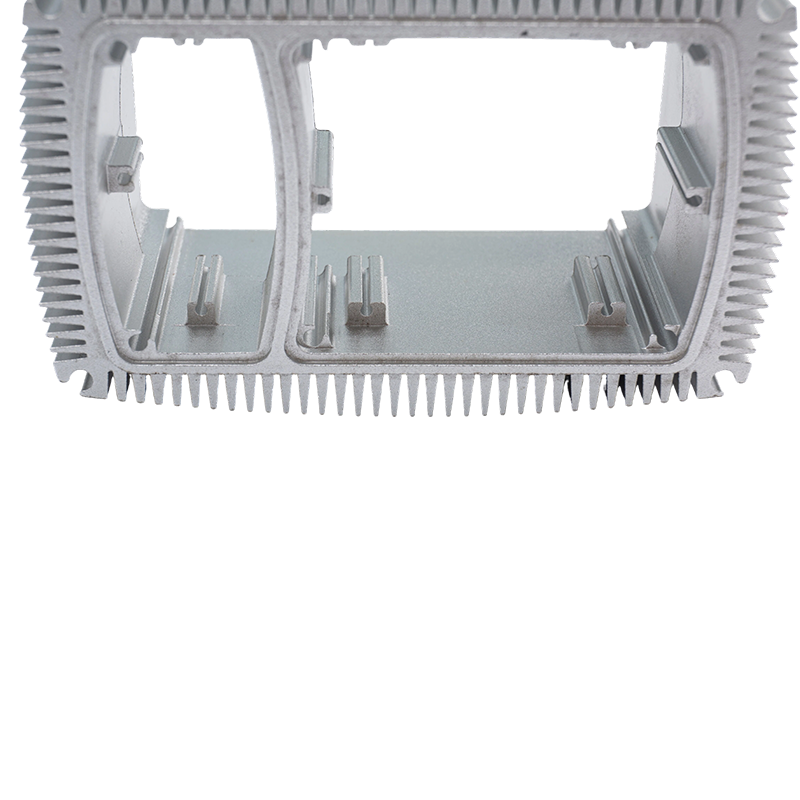 High thermal conductivity anodized aluminum heat sink profiles Suppliers, CompanArrayView Product →
Heater Profiles
Heater enclosures and duct heaters need uniform surface temperature so the air stream is not overheated in one location. Aluminum's light weight and good conductivity spread heat quickly along the profile. Our high thermal conductivity heaters aluminum profiles are an extruded solution for that exact duty.
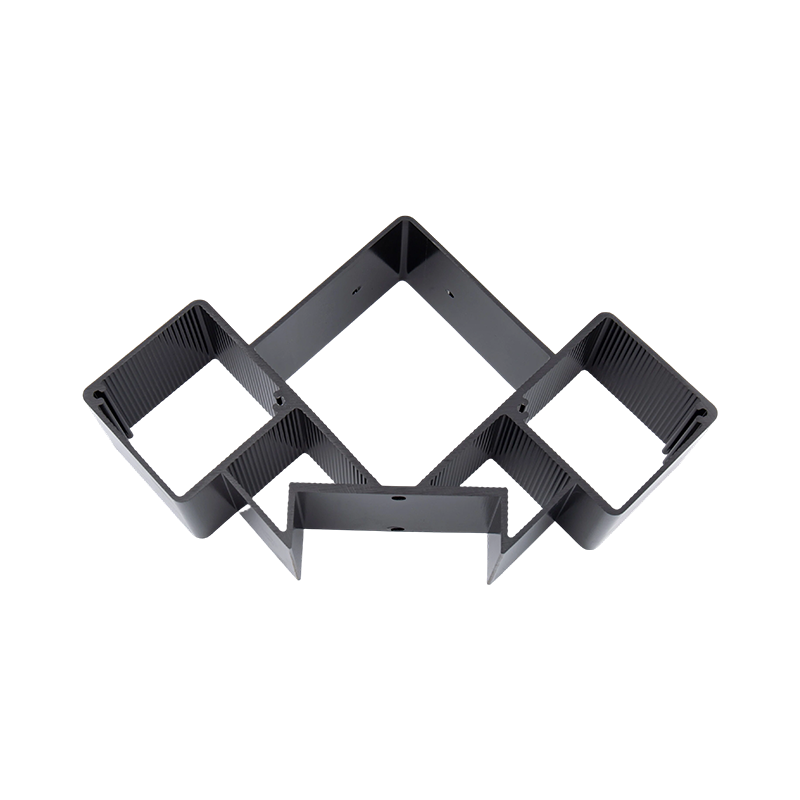 High thermal conductivity heaters aluminum profiles Suppliers, Company - Huzhou ArrayView Product →
What to Do With This Data
Start with the required thermal resistance, then choose an alloy, temper, and profile geometry that meet it. If the budget allows, prototype with 6063-T5 or a low-iron 6xxx alloy and measure actual temperatures. Do not rely only on textbook values; supplier data, surface finish, and interface materials all matter.
For extruded parts such as heat sinks and heater profiles, the manufacturer's process control is as important as the alloy. A supplier that understands die flow, heat treatment, and finishing can deliver consistent thermal performance. That is why thermal conductivity should be discussed during the design phase, not after the drawing is frozen.
Previous Post
Aluminium Anodizing Colours: Options, Limits, and How to Specify Them Correctly
Next Post
Can You Powder Coat Aluminum Extrusion? Process & Prep Guide

Address
No. 18, Industrial Park, Yanghua Village, Nanxun Town, Nanxun District, Huzhou City, Zhejiang Province, China
Quick Menu
Subscribe newslatter
Copyright © Huzhou Yindu Aluminum Technology Co. , Ltd. Rights Reserved.
 Custom Aluminum Extrusions Manufacturers

